
Learning to sew quilt blocks is one of the best ways to build your quilting skills. Blocks are the foundation of many quilt designs, and mastering a few simple ones will give you the confidence to create countless patterns and styles. Whether you’re a complete beginner or looking to expand your skills, easy quilt blocks make the perfect starting point. They allow you to practice cutting, piecing, seam accuracy, and color placement—all essential techniques in quilting. This guide introduces twelve beginner-friendly quilt blocks you can start sewing today, each designed to help you grow as a quilter while enjoying the creative process.
Four Patch Block
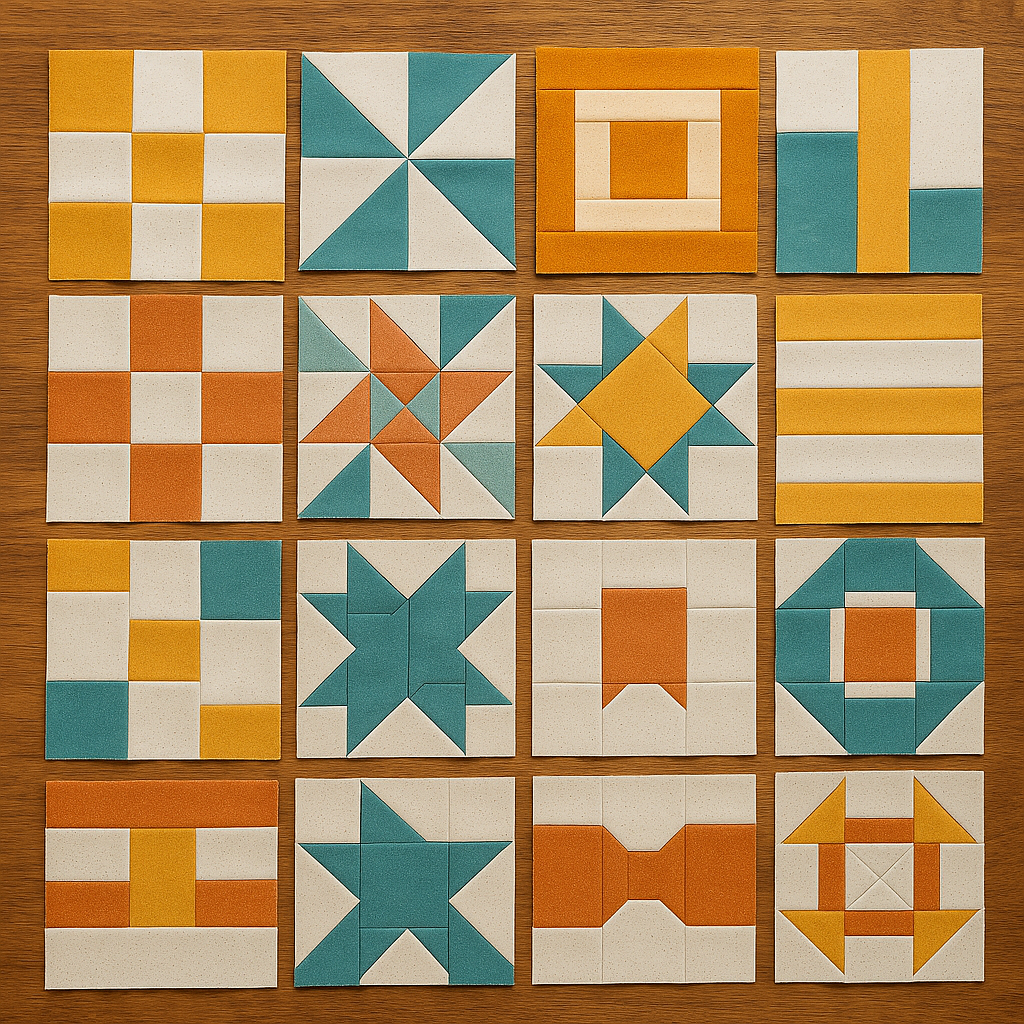
The Four Patch is one of the most basic and versatile quilt blocks. It uses four squares of fabric arranged in a simple two-by-two grid. This block teaches accurate piecing and seam pressing, and it works beautifully in both traditional and modern quilts. You can keep it simple with solid fabrics or create more visual interest by alternating colors. Four Patch blocks are quick to sew and perfect for using leftover scraps.
Nine Patch Block
The Nine Patch builds on the Four Patch concept by adding more squares. Arranged in a three-by-three grid, this block introduces repetition and color balance. It is an excellent choice for practicing consistent seam allowances. By alternating dark and light fabrics, you can create striking checkerboard effects. This timeless block appears in countless quilt patterns and is ideal for beginners.
Half Square Triangle Block
Also known as HSTs, Half Square Triangles are essential in quilting. They are created by sewing two squares together and cutting diagonally to form two triangles. HSTs allow for endless design possibilities, from chevrons to stars to diamonds. They teach precision, trimming techniques, and color contrast. Once you master HSTs, you can create dozens of classic and modern quilt designs.
Quarter Square Triangle Block
The Quarter Square Triangle, or QST, is similar to the HST but forms four triangles meeting at the center. This block is great for building more advanced skills while still being beginner-friendly. It results in beautiful star-like patterns and can be used to create movement within your quilt. QSTs are perfect for adding variety if you’re ready for something slightly more complex.
Log Cabin Block
The Log Cabin block is iconic in quilting and surprisingly easy to sew. Starting with a center square, you add strips of fabric around it in a spiral or “cabin” formation. This block is perfect for using strip scraps and practicing accuracy with long seams. Log Cabin designs can be arranged in multiple layouts, including Barn Raising, Courthouse Steps, and Sunshine and Shadow. Each arrangement creates a completely different quilt style.
Rail Fence Block
The Rail Fence block uses fabric strips sewn together and cut into square units. When the units are rotated and arranged in alternating directions, they create a striking geometric pattern. This block is excellent for beginners learning to sew long strips and maintain straight seams. It’s also very forgiving, making it ideal for first-time quilters.
Pinwheel Block
The Pinwheel block uses Half Square Triangles arranged to create a spinning effect. It looks intricate but is surprisingly easy to make. Pinwheel blocks help beginners practice matching points and pressing seams correctly. They create a playful, dynamic look and are popular in baby quilts, patriotic quilts, and modern designs alike.
Churn Dash Block
The Churn Dash is a traditional block made from rectangles, squares, and half-square triangles. Despite its vintage origins, it fits beautifully in modern quilts. The block is simple yet visually appealing, making it perfect for beginners who want a step up from basic square blocks. It teaches shape variety and adds texture to your quilt layout.
Friendship Star Block
The Friendship Star is made from one central square surrounded by Half Square Triangles. This simple block carries sentimental value and is often used in quilts gifted to friends or family. Its design is clean and elegant, and it works well in quilts with soft colors or bold, contrasting palettes. The block offers a gentle introduction to working with star patterns.
Shoofly Block
The Shoofly block resembles the Churn Dash but features a different arrangement of shapes. It is constructed from a central square, surrounding HSTs, and corner squares. This classic block is great for practicing piecing accuracy and color contrast. The Shoofly is commonly used in sampler quilts and works well with prints and solids.
Bow Tie Block
The Bow Tie block is charming and easy to sew. It uses simple squares and small connector pieces to create a bow-like shape. This block is perfect for beginners looking to experiment with shape illusion. Bow Tie quilts can be playful or sophisticated depending on fabric choices. The block also works well for scrap quilting.
Ohio Star Block
The Ohio Star is a timeless favorite composed of Quarter Square Triangles and solid squares. It creates a beautiful star pattern that looks more complex than it is. Beginners who have mastered HSTs and want to try a slightly more challenging block will enjoy the Ohio Star. It brings elegance and symmetry to quilts and works especially well with contrasting fabrics.
Bringing Your Blocks Together
Once you’ve created several different blocks, the fun of assembling your quilt begins. You can combine blocks of the same type for a cohesive design or mix multiple block styles in a sampler quilt. A sampler quilt is a popular choice for beginners because it allows you to practice various skills while creating a quilt full of personality and variety. When arranging your blocks, pay attention to color balance, contrast, and spacing. Experiment with different layouts until you find one that feels visually pleasing.
Choosing Fabrics for Beginner Blocks
When selecting fabrics for your quilt blocks, consider using a mix of solids and subtle prints. Solids make shapes stand out clearly, helping you see how the blocks interact. Prints can add depth and softness, but choose them carefully to avoid overpowering the design. Pre-cut bundles such as fat quarters or charm packs are great for beginners because the colors already coordinate.
Practicing Accuracy and Technique
Sewing accurate seams is one of the most important skills in quilting. A consistent quarter-inch seam allowance ensures your blocks match in size and fit together smoothly. Pressing seams carefully—either open or to the side—helps keep blocks flat and tidy. Trimming blocks as you go also improves your accuracy and makes final assembly easier.
Enjoying the Process
Learning quilt blocks should be enjoyable, not stressful. Each block you sew teaches you something new, whether it’s cutting precision, seam alignment, color placement, or fabric control. As you build confidence, you’ll find that even the simplest blocks can look beautiful when arranged creatively. The more blocks you make, the more skilled and inspired you’ll become.