
Quilting is one of the most enjoyable and creative ways to turn fabric into something beautiful and useful. For beginners, it can feel overwhelming at first—so many fabrics, tools, and techniques to choose from. The good news is that you don’t need advanced skills to start quilting. By beginning with simple patterns, you can build confidence, learn key techniques, and complete a quilt project you can be proud of. In this guide, you’ll explore ten beginner-friendly quilt patterns that are easy to make, fun to sew, and perfect for learning the basics. These patterns use simple shapes, straightforward construction, and flexible designs that allow you to experiment with colors and textures without feeling lost. Whether you want a relaxing hobby or a new creative outlet, these patterns will help you begin your quilting journey with ease.
Four Patch Quilt
The Four Patch is one of the most classic and accessible quilt patterns. It uses only four fabric squares arranged in a simple two-by-two grid. This straightforward layout helps beginners learn how to cut accurately, sew straight seams, and practice color placement. You can use two contrasting fabrics to create a bold design or choose four coordinating prints for a softer, blended look. Because the pattern is so simple, it’s excellent for using leftover fabric scraps and for practicing consistent seam allowances. Once you master the Four Patch, you can combine multiple blocks to create a full quilt or use individual blocks as coasters, mini wall hangings, or pillow covers.
Nine Patch Quilt
The Nine Patch builds on the Four Patch concept by using a three-by-three grid. This pattern gives beginners more room to experiment with color combinations and fabric placement while still being very simple to assemble. Nine small squares are sewn together to form a block, and the repetition of cutting and piecing helps reinforce your sewing skills. Many beginners find the Nine Patch rewarding because the finished block looks more complex than it actually is. You can alternate light and dark squares for a checkerboard effect or use patterned fabric to create unique visual interest. Nine Patch blocks can be arranged in dozens of layouts, making it incredibly versatile.
Rail Fence Quilt
The Rail Fence pattern uses strips of fabric sewn together and then cut into blocks. These blocks are arranged in alternating directions to create a zigzag or “fence” effect. This design teaches beginners how to sew long, straight seams and how to press seams properly to keep blocks neat. One of the advantages of the Rail Fence quilt is that it looks more complex than the construction actually is. Because the blocks use fabric strips, the pattern is ideal for pre-cut fabric packs such as jelly rolls. The bold stripe effect makes this a favorite among beginners who want a quilt that looks stylish with minimal difficulty.
Half Square Triangle Quilt
Half Square Triangles, often called HSTs, are essential building blocks in quilting. This pattern involves sewing two squares together, then cutting them diagonally to create two triangle-based units. Although the technique may seem intimidating at first, beginners quickly discover that it’s easy and enjoyable. HSTs offer endless design possibilities, from simple alternating triangles to chevrons, diamonds, stars, and more. Working with HSTs helps quilters improve accuracy, learn how to handle bias edges, and practice arranging geometric layouts. With just a few fabrics, you can create a quilt that looks intricate without requiring advanced skills.
Strip Quilt
Strip quilts are some of the fastest and easiest quilts for beginners. Instead of piecing small shapes, you sew long fabric strips together and then trim them into the size you want. This method eliminates much of the precise cutting required in other patterns, making it ideal for new quilters. The simplicity of the construction allows you to focus on choosing colors and prints that complement one another. The finished quilt has a clean, modern look, and because it uses strips, it is also a great way to showcase bold fabric patterns. For beginners who want a quick win, the Strip Quilt is a perfect choice.
Pinwheel Quilt
The Pinwheel pattern uses Half Square Triangles arranged in a spinning design that resembles a pinwheel. Although it looks a little more advanced, the construction is still very beginner-friendly. This pattern helps you practice aligning points and maintaining accurate seams, both of which are essential quilting skills. Pinwheel quilts are charming, playful, and especially popular for baby quilts or decorative throws. You can use high-contrast fabrics to emphasize the spinning motion or softer colors for a gentle, classic look. Once you learn how to create the basic pinwheel block, you can use it in many other quilt designs.
Checkerboard Quilt
The Checkerboard Quilt uses alternating light and dark squares to create a timeless grid pattern. This design is excellent for beginners because the cutting and sewing are very straightforward. It’s also a great way to experiment with color contrast and fabric value, which are important concepts in quilt design. You can use two colors for a traditional checkerboard, or expand the palette with multiple prints for a more dynamic look. Checkerboard quilts are clean, elegant, and suitable for any room. They also pair well with borders or additional blocks, giving you many creative options.
Log Cabin Quilt
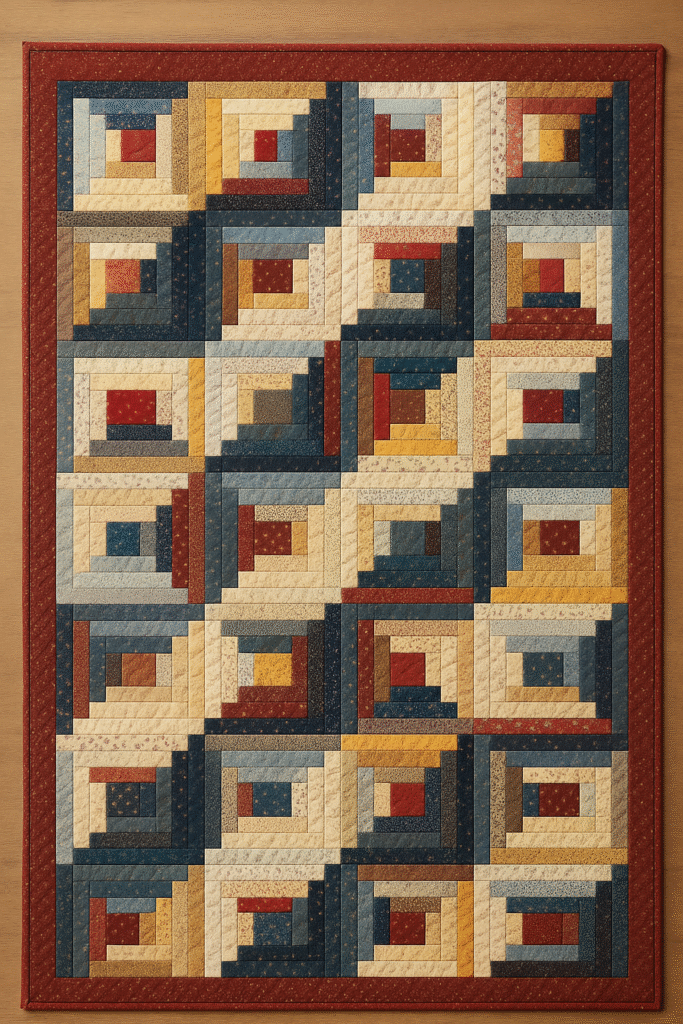
The Log Cabin is one of the most traditional quilt patterns and a wonderful option for beginners. It consists of a central square surrounded by fabric strips arranged in a spiral or “cabin” layout. Although the finished block looks intricate, the construction is simple and repetitive. Log Cabin quilts are great for practicing consistent strip width, managing fabric placement, and pressing seams. The design also allows you to play with light and dark fabrics to create striking contrast or warm, cozy finishes. Because the block is modular, you can rearrange it in countless ways, making it one of the most versatile beginner patterns.
Brick Wall Quilt
The Brick Wall pattern uses rectangular fabric pieces arranged in staggered rows, mimicking the look of a brick wall. This pattern is ideal for beginners because it avoids complicated piecing and requires minimal precision. The design naturally hides small mistakes, making it very forgiving. Brick Wall quilts are also perfect for showcasing large prints, novelty fabrics, or bold color combinations. You can achieve a modern, clean appearance with solid fabrics or a playful, eclectic style with patterned pieces. The simplicity of the layout makes this quilt quick to sew and satisfying for beginners.
Simple Star Quilt
The Simple Star pattern uses squares and Half Square Triangles to create a classic star shape. This design helps beginners practice key skills such as sewing diagonal seams and aligning points. Despite its striking appearance, the Simple Star is easy to construct and can be adapted to many styles. You can create a single large star as the centerpiece of the quilt or repeat smaller stars across the layout. The pattern is perfect for holiday-themed quilts, baby quilts, or decorative wall hangings. With just a few fabrics, you can create a quilt that feels timeless and elegant.
If you’re new to quilting, these ten beginner-friendly patterns provide the perfect foundation. They allow you to learn essential techniques, practice accurate cutting and sewing, and experiment with colors and designs. Each pattern helps you build confidence while giving you the satisfaction of completing a beautiful handmade project. As you explore these patterns, you will develop skills that open the door to more complex and creative quilting adventures.