
Scrap quilts are some of the most charming, creative, and meaningful quilts you can make. They tell a story through mismatched pieces, old favorites, and fabrics from past projects. Whether you have a growing stash of scraps or simply want to make the most of your materials, scrap quilts are the perfect way to recycle fabric while expressing your creativity. Many beginner and experienced quilters alike love scrap quilting because it encourages improvisation, allows for endless variety, and eliminates waste. This guide will show you how to choose scraps, organize them, design layouts, and sew scrap quilts that are both beautiful and functional.
Why Scrap Quilting Is So Popular
Scrap quilting has a rich tradition in quilting history. In the past, quilters used leftover fabric from clothing, household textiles, and sewing projects to create warm and practical quilts. Today, scrap quilting continues to thrive because it combines sustainability with creativity. No two scrap quilts are ever the same, making each one unique. Scrap quilts are also accessible to beginners because they don’t require large cuts of fabric or a perfectly coordinated palette. Instead, you can use what you already have, saving money and reducing waste.
Gathering and Organizing Your Scraps
Before starting a scrap quilt, it helps to organize your leftover fabric. Scraps come in all shapes and sizes—tiny squares, long strips, triangles, selvages, and irregular shapes. A good organizational system will help you see what you have and make it easier to plan your quilt. You can sort scraps by color, size, or type. Some quilters prefer using clear bins or drawers, while others keep scraps in color-coded bags. If your scraps vary greatly in size, consider trimming them into common shapes such as squares or strips. This makes them easier to use in many patchwork designs.
Choosing a Scrap Quilt Pattern
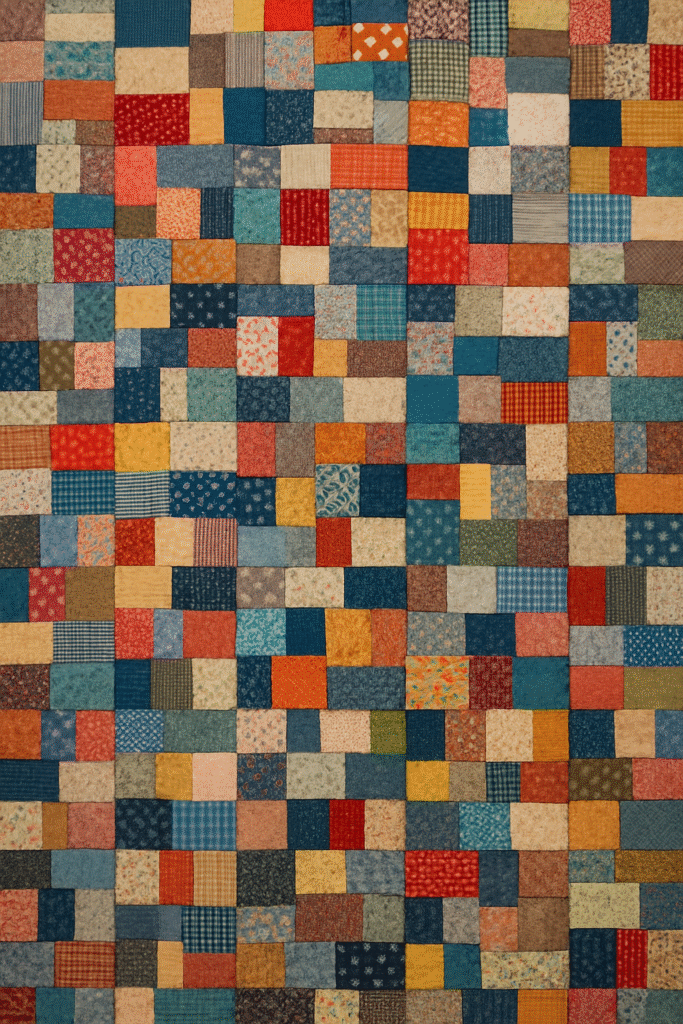
Scrap quilts can follow traditional patterns or be entirely improvisational. Patterns that use small pieces, repeating shapes, or simple blocks work especially well for scraps. Popular options include the Nine Patch, Log Cabin, Rail Fence, and string quilts. These patterns allow you to mix and match fabrics without worrying about perfect coordination. Improvisational scrap quilts, also known as “crumb quilts,” are made by sewing small pieces together randomly until they form usable blocks. This freeform approach is perfect if you want a playful, artistic quilt without strict rules.
Working With Color in Scrap Quilts
Even though scrap quilts use a wide variety of fabrics, color still plays an important role. Too many random colors can make the quilt look chaotic, but the right balance can create harmony. One way to create cohesion is to choose a dominant color family, such as blues or neutrals, and allow other colors to support it. Another method is to use a unifying background fabric that ties everything together. You can also organize scraps into warm and cool tones or mix solids with prints to create balance. The goal is not perfect coordination but controlled creativity.
Using Value to Create Contrast
Value—lightness or darkness—can make or break a scrap quilt. When scraps vary widely in tone, using value effectively ensures that patterns stand out instead of blending together. Many quilters sort scraps into light, medium, and dark groups before designing their quilts. Using these groups intentionally helps define shapes, add depth, and create visual movement. For example, alternating light and dark scraps in a Nine Patch block makes the pattern pop, even when the colors differ. Understanding value helps you use scraps more effectively regardless of their color.
Preparing Scraps for Sewing
Scraps often come in irregular shapes or uneven edges, so it’s important to trim them before sewing. Begin by pressing your scraps to remove wrinkles. Use a rotary cutter and ruler to square up edges or cut pieces into uniform sizes. If you’re planning to make blocks from specific shapes—such as 2.5-inch squares or 1.5-inch strips—trim your scraps accordingly. Trimming not only improves accuracy but also helps you maintain a consistent look across your quilt. Even improvisational designs benefit from some degree of preparation.
Sewing Scrap Blocks
Sewing with scraps is similar to sewing with regular fabric, but it often involves more creativity and flexibility. For structured blocks, follow your pattern just as you would with new fabric. For improvisational blocks, sew small pieces together to form larger units. You can join tiny triangles, narrow strips, or odd shapes to create interesting textures and patterns. As you sew, press seams carefully to keep blocks flat. If some blocks turn out slightly larger or smaller than planned, you can trim them to a uniform size during assembly.
Creating String Blocks
String quilts are a popular and beginner-friendly way to use long strips of fabric. To make string blocks, sew strips diagonally or horizontally onto a foundation fabric or paper. When trimmed into squares, these blocks create bold, colorful patterns. String blocks are perfect for scraps too narrow for other projects and offer a satisfying way to use leftover pieces. They can be arranged in various layouts—chevron, diamond, or random stripes—to create exciting visual effects.
Balancing Prints and Solids
Scraps often include a mixture of solids, florals, geometrics, and novelty prints. Too many prints can overwhelm the design, but using solids alongside them creates balance. Solids help define shapes and give the eyes a place to rest. When making scrap quilts, intentionally mix prints with solids to establish contrast and clarity. If your scrap collection lacks solids, consider adding a few coordinating pieces to ground the design. Alternatively, choose a bold solid background fabric to tie everything together.
Assembling the Quilt Top
Once you’ve made your blocks, lay them out on a flat surface or design wall. This helps you visualize how the scraps interact with each other. Move blocks around until the colors and values feel balanced. Pay attention to unintended clusters of the same color or print, and spread them evenly if necessary. After finalizing your layout, sew the blocks together row by row. Press seams as you go to keep the quilt top neat and smooth. Adding borders is optional but can help frame the design and give the quilt a polished look.
Quilting and Finishing Scrap Quilts
Scrap quilts often look best with simple quilting designs that don’t compete with the busy patchwork. Straight-line quilting, grid quilting, or gentle curves work well. Once quilted, trim the edges and attach binding. Scrappy binding—made from leftover strips—is a fun way to continue the theme of the quilt and add a lively finishing touch. Because scrap quilts are often full of variety, they make durable and functional quilts perfect for everyday use.
Why Scrap Quilts Are Meaningful
Scrap quilts hold sentimental value because they contain pieces of past projects, clothing, and memories. Each fabric tells a story, making the quilt truly one of a kind. Scrap quilting also fosters sustainability by reducing waste and encouraging creative reuse. Many quilters find joy in turning simple leftovers into something beautiful and useful. Whether you donate your scrap quilt, gift it, or keep it for yourself, it becomes a meaningful piece with its own history.
Embracing Creativity and Imperfection
The most important rule in scrap quilting is that there are no strict rules. Scraps encourage improvisation, risk-taking, and experimentation. Imperfections add charm and character, reminding you that quilting is a handmade craft. Scrap quilts celebrate creativity in its purest form. As you continue working with scraps, you’ll develop an intuitive sense of design and discover new ways to combine fabrics that you may have never considered before.