
Crochet squares are one of the most versatile and creative elements in the fiber arts world. They are small, portable, beginner-friendly, and incredibly customizable. When most people think of quilt projects, they imagine patchwork made entirely from fabric. However, crochet squares can be combined with quilts in beautiful and unexpected ways. Whether you want to create a quilt-like blanket made entirely from crochet motifs or incorporate crochet details into traditional quilting, crochet squares offer endless possibilities. This guide will show you how to create crochet squares, how to choose the right stitches, and how to incorporate them into quilt-style projects that stand out.
Why Crochet Squares Work Well in Quilt Projects
Crochet squares have a structural similarity to quilt blocks, making them a natural match for quilt-inspired layouts. Each square can function as a “block,” and when joined together, they create a cohesive blanket, throw, or decorative piece. Crochet squares can mimic patchwork through color changes, textures, and geometric motifs. They are ideal for mixing fiber arts with quilting traditions and allow you to experiment with bold designs while maintaining a modular format. Their versatility makes them perfect for beginners and experienced crafters alike.
Choosing the Right Yarn for Crochet Squares
Selecting the right yarn is essential when creating crochet squares for quilt-style projects. Medium-weight yarn (worsted weight) is ideal for beginners because it strikes a balance between thickness and flexibility. Cotton yarn is sturdy, breathable, and ideal for squares used in home décor or items that require durability. Acrylic yarn is soft, affordable, and easy to care for, making it a great choice for blankets and throws. Wool blends add warmth and stretch, ideal for cozy winter projects. When combining multiple squares in a single project, always use yarns of the same weight to ensure consistency in size and drape.
Understanding Tension and Gauge
Gauge refers to the number of stitches and rows per inch in your crochet. Maintaining consistent gauge across all your squares ensures they fit together neatly. Before starting a large project, crochet one test square following your chosen pattern. Measure it to see whether it matches the expected size. If it’s too small, use a larger hook; if it’s too large, switch to a smaller hook. Consistent tension helps your final quilt-style project lie flat and look professional.
Classic Granny Squares
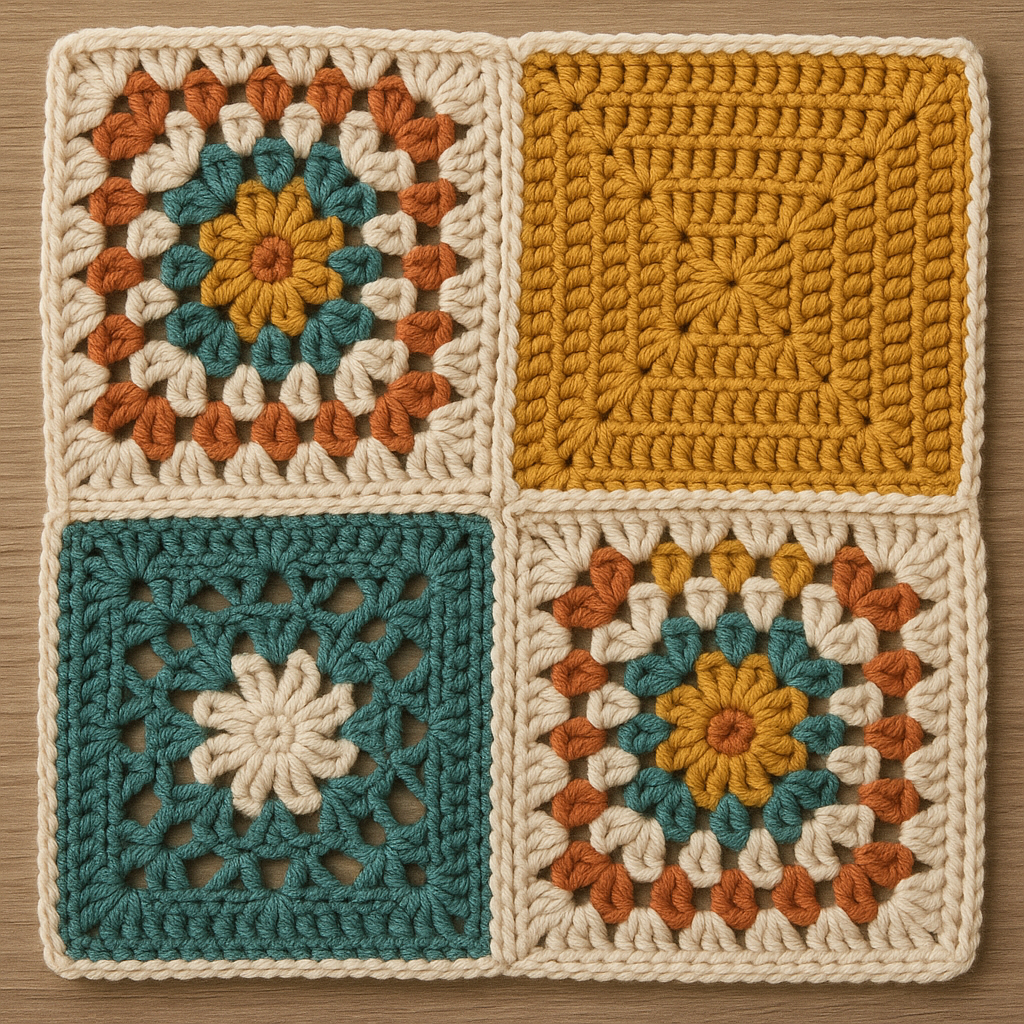
The classic granny square is one of the most recognizable crochet motifs. It begins with a small center ring and expands outward using clusters of double crochet stitches. Granny squares are perfect for quilt-style projects because they can be made in countless color combinations. You can create a harmonious palette for a coordinated look or mix random colors for a traditional scrap-quilt effect. Because granny squares work from the center outward, they allow you to expand your project easily by adding more rounds.
Solid Crochet Squares
Solid squares use stitches worked closely together to create a dense, fabric-like texture similar to traditional quilting blocks. These squares often use single crochet, half double crochet, or double crochet worked in rows or rounds. Solid squares are excellent for beginners because they involve straightforward stitches and produce clean, modern designs. They add structure to quilt-style projects and pair beautifully with more decorative squares.
Textured Crochet Squares
Textured squares incorporate stitches like puff stitches, bobbles, popcorns, or front-post and back-post stitches to create depth and dimension. These squares mimic the look of raised quilting designs. Textured squares make excellent focal blocks in quilt-style blankets, adding visual interest and tactile appeal. However, because they use more yarn and create thicker fabric, it’s important to balance them with simpler squares to maintain even weight and drape in your final project.
Lace Crochet Squares
Lace squares use chain spaces and openwork stitches to create delicate, airy designs. These motifs work well in decorative throws, shawls, or lightweight blankets. Lace squares offer a quilt-inspired patchwork look with a softer, more intricate feel. When combining lace squares with solid squares, consider using a lightweight yarn or working extra border rounds to match the size and density of the other motifs.
Colorwork Squares
Colorwork crochet squares use multiple yarn colors to create graphic designs, shapes, or patterns. Techniques like tapestry crochet, mosaic crochet, and color-changing rows bring quilt-like geometry to crochet. You can create squares that resemble traditional quilt blocks, such as stars, diamonds, or stripes. Colorwork squares are ideal for projects where you want high contrast and bold visual impact.
Joining Crochet Squares
Once your squares are completed, joining them together is similar to assembling quilt blocks. Several joining methods allow you to achieve different looks:
Slip stitch join creates a subtle, clean seam
Single crochet join adds texture and definition
Whip stitch join produces nearly invisible seams
Join-as-you-go (JAYG) connects squares while crocheting the last round
Select a joining method based on your project’s style. For modern quilt-style blankets, invisible joins look sleek and minimal. For rustic or vintage styles, visible crochet joins add charm and character.
Adding Borders to Your Project
Borders frame your quilt-style project and add structure. You can use simple single crochet or double crochet rounds for a clean finish, or create decorative borders with shells, picots, or scallops. If your squares vary slightly in size, adding a border can help even out the edges before joining. Borders also provide a polished look and enhance the overall design.
Combining Crochet Squares with Fabric Quilting
One of the most unique ways to use crochet squares is by combining them with fabric quilting. You can alternate crochet squares with quilted fabric blocks to create hybrid blankets or accent pieces. This technique blends the warmth of fabric with the texture of crochet. When mixing mediums, ensure your crochet squares match the size of your fabric blocks and consider adding stabilizing fabric or interfacing if needed. These hybrid projects offer a creative twist on traditional quilting and highlight both crafts beautifully.
Project Ideas Using Crochet Squares
Crochet squares can be used in many quilt-inspired projects. A quilt-style blanket made entirely from crochet squares is warm, textured, and visually stunning. Smaller projects like table runners, pillow covers, tote bags, and wall hangings also benefit from the modular nature of squares. You can create themed sets using specific colors or designs or mix leftover squares for a “scrap quilt” look. The possibilities are endless and allow room for experimentation.
Tips for Keeping Your Squares Consistent
To achieve a professional and uniform look, focus on keeping your squares consistent in size, shape, and tension. Weigh or measure your yarn if you are using leftover scraps to ensure you have enough for matching sets. When working with multiple colors, carry yarn neatly or cut and weave in ends securely. Blocking your squares after finishing helps them lie flat and match each other in shape. Consistency ensures the final assembly of your project goes smoothly.
Enjoying the Creative Process
Crochet squares offer endless opportunities for creativity, whether you prefer simple stitches or complex designs. They allow you to mix colors, textures, and shapes while working piece by piece. This modular approach makes large projects manageable and beginner-friendly. As you experiment with different square styles, you will discover your preferences and develop your own aesthetic. Combining crochet with quilt-inspired layouts results in projects rich in texture, color, and personality.