
Geometric quilt designs are some of the most striking and visually appealing patterns in the quilting world. They feature clean lines, bold shapes, and repeating patterns that create a modern and polished look. Whether you are a beginner or an experienced quilter, geometric quilts offer endless creative possibilities. Their structured nature makes them perfect for experimenting with color, contrast, symmetry, and layout. This guide will walk you through the essential principles and steps for designing your own geometric quilts, from choosing shapes to planning layouts and selecting color palettes.
Understanding the Appeal of Geometric Quilts
Geometric quilts stand out because they rely on simple shapes arranged in visually captivating ways. Squares, triangles, diamonds, and hexagons can be combined to create complex designs without requiring advanced sewing techniques. These quilts are perfect for modern homes due to their clean and minimalistic aesthetic. They also offer flexibility—your design can be bold and dramatic or soft and calming depending on your fabric choices. Geometric quilts are ideal for beginners who want to practice accuracy and experienced quilters who want to explore creative compositions.
Start With Simple Shapes
The foundation of geometric quilt design begins with choosing the shapes you want to work with. Some of the most popular shapes include:
Squares – The easiest and most versatile shape, ideal for simple grids, checkerboards, and pixel-style quilts.
Rectangles – Great for brick layouts, strip quilts, and modern linear designs.
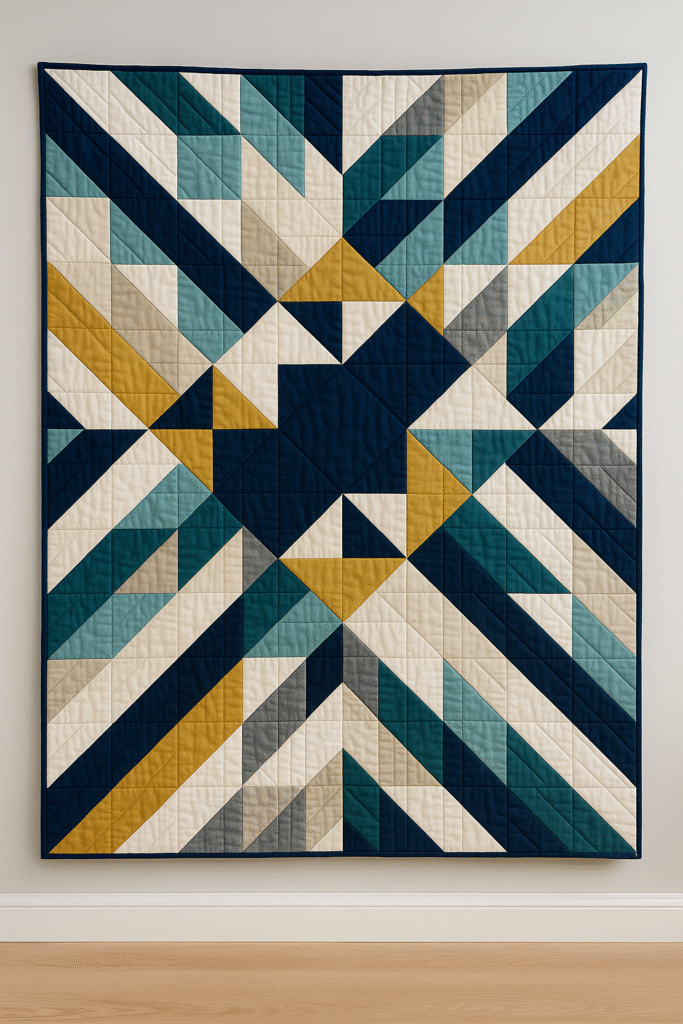
Triangles – Half-square triangles (HSTs) and quarter-square triangles (QSTs) create dynamic movement through angles.
Diamonds – A stylish choice that adds sophistication but requires more precise cutting.
Hexagons – Eye-catching for modern designs but more advanced due to curved seams.
Starting with basic shapes allows you to experiment with composition while maintaining an accessible skill level.
Exploring Grid-Based Designs
Most geometric quilts begin with a grid structure. Grids keep your layout organized and help maintain symmetry. Common grid designs include:
Straight grid – Uniform rows and columns.
Offset grid – Staggered rows for a more dynamic look.
Modular grid – Blocks of different shapes arranged in larger repeating units.
Pixelated grid – Uses many small squares to form images or gradients.
Grids provide an easy foundation for experimenting with color and contrast while keeping the overall design clean and cohesive.
Working With Half-Square Triangles (HSTs)
Half-square triangles are essential building blocks in geometric quilts. They are versatile, easy to make, and perfect for creating chevrons, diamonds, pinwheels, and diagonal patterns. You can rotate HSTs to form endless geometric designs. Whether you use bold solids or mixed prints, HSTs add movement and interest. They also help develop accuracy and are great for beginners wanting to advance their piecing skills.
Planning Symmetry and Balance
Geometric quilts rely heavily on symmetry and visual balance. Symmetry can be:
Mirror symmetry – Both sides reflect each other.
Rotational symmetry – A pattern rotates around a center point.
Repeating symmetry – A motif repeats horizontally or vertically.
Balance doesn’t always require perfect symmetry; it simply means distributing colors, shapes, and sizes evenly so the design feels harmonious. Experiment with different layouts until your eye feels comfortable with the arrangement.
Using Color Theory to Enhance Your Design
Color is a powerful tool in geometric quilts. The same design can look entirely different depending on the palette. Consider these approaches:
Monochromatic – Shades of a single color for a calming, minimalist look.
Complementary – Opposites on the color wheel for bold contrast (e.g., blue and orange).
Analogous – Colors next to each other on the color wheel, offering a soft blend (e.g., green, teal, blue).
Neutral tones – Grays, creams, and blacks for sophisticated modern quilts.
High-contrast palettes make geometric shapes stand out clearly, while soft palettes create gentle transitions. Don’t be afraid to experiment with swatches before committing.
Playing With Scale
Scale is an important design element. You can use large shapes for a dramatic, modern look or small pieces for intricate, detailed designs. Mixing scales—large blocks next to smaller blocks—adds texture and visual interest. For example:
Large HSTs create bold, modern chevrons.
Small squares create pixelated gradients.
Oversized blocks create statement focal points.
When planning a quilt, consider how scale affects both the sewing process and the final aesthetic.
Using Repetition and Rhythm
Repetition is key in geometric design. Repeating the same block throughout the quilt creates a sense of unity. Rhythm emerges when shapes or colors repeat in predictable patterns. For example:
Repeating triangles create zigzag rhythms.
Alternating squares and rectangles create structured movement.
Using repetition helps tie different elements together and guides the viewer’s eye across the quilt.
Adding Negative Space
Negative space—areas of solid fabric without pattern—gives geometric quilts a modern and airy feel. It allows the shapes to stand out more clearly and adds visual breathing room. White, cream, gray, or even bold solid colors can serve as negative space. Incorporating negative space also makes quilting easier and allows you to highlight specific blocks or areas in your design.
Sketching Your Quilt Layout
Before cutting any fabric, sketch your design. You can use graph paper or a digital design tool. Sketching helps you:
Visualize the layout
Block out color placement
Adjust symmetry
Test different compositions
A sketch serves as your blueprint and prevents costly mistakes later. Even rough sketches help organize your ideas and guide your cutting plan.
Testing With Digital Tools
Many quilters use digital tools to design geometric quilts. Programs like EQ8, Procreate, or online quilt planners allow you to change colors, test shapes, and try different arrangements instantly. Digital tools are especially helpful for beginners because they remove guesswork and present an accurate preview of the final quilt.
Precision Cutting and Piecing
Accuracy is essential in geometric quilts. Straight lines and sharp angles require precise cutting. Use a rotary cutter, acrylic ruler, and cutting mat to ensure exact measurements. When piecing, maintain a consistent quarter-inch seam allowance. Press seams carefully to keep blocks flat and aligned. The cleaner your piecing, the more polished your geometric design will look.
Using Layout Boards or Design Walls
A design wall allows you to see your quilt layout before sewing it together. You can rearrange blocks, refine color placement, and experiment with balance. A simple piece of batting pinned to the wall works perfectly. Viewing your quilt from a distance helps you spot patterns, adjust symmetry, and refine scale.
Combining Shapes for Complexity
Once you’re comfortable with basic shapes, you can combine them to create more complex designs. For example:
Squares + HSTs = pinwheels
Rectangles + triangles = arrows
Squares + diamonds = starburst designs
Mixing shapes adds sophistication and gives your quilt a unique visual identity.
Modern Minimalist Designs
Minimalist geometric quilts use simple shapes and plenty of negative space. These designs often feature:
Large blocks
Muted colors
Clean lines
High contrast
Minimalist quilts are quick to sew and visually stunning, making them perfect for modern home décor.
Bold Color Block Quilts
Color block quilts use large sections of solid color arranged in geometric shapes. They are striking and modern, offering high impact with relatively simple construction. This style is ideal for beginners who want a clean and contemporary aesthetic.
Quilting Motifs That Complement Geometry
The quilting itself plays a role in geometric quilts. Straight-line quilting, echo quilting, and grid quilting enhance geometric designs. The quilting stitches add texture and reinforce the shapes. Even simple quilting enhances the modern look.
Trusting Your Creative Instincts
Geometric quilts encourage creativity. There are no strict rules—only guidelines. Explore, experiment, and trust your artistic instincts. Every quilt you design helps you understand shape, proportion, and color more deeply.