
Quilt binding is the final step that gives your quilt a clean, polished, and professional finish. Although it may seem like a small detail, well-made binding enhances the durability and appearance of your quilt. A perfect binding lies flat, has crisp corners, and blends beautifully with the overall design. Whether you are a beginner or an experienced quilter looking to refine your technique, learning how to create flawless quilt bindings will elevate your work tremendously. This guide explores the best methods, tips, and techniques to help you achieve perfect quilt bindings every time.
Understanding the Purpose of Quilt Binding
Binding is more than a decorative border. It serves several important functions. First, it encloses the raw edges of your quilt sandwich, preventing fraying and wear. Second, it reinforces the outer perimeter, helping your quilt maintain its shape over time. Third, binding frames the quilt visually, giving it a completed look. Because binding is the part of the quilt that receives frequent handling, it must be strong and neatly constructed. Mastering binding ensures your quilt remains beautiful and functional for years.
Choosing the Right Fabric for Binding
The fabric you choose for binding significantly affects the final appearance. Quilters commonly use the same fabric as the quilt borders to create a cohesive look, but contrasting fabrics can make the binding stand out as a design feature. Small prints or solids work best because large motifs may not appear correctly on narrow strips. High-quality quilting cotton provides durability and flexibility, making it ideal for binding. If your quilt has high-contrast seams or strong colors, consider using a darker binding to hide any seams that may show through.
Deciding Between Straight-Grain and Bias Binding
There are two main types of binding: straight-grain and bias. Straight-grain binding is cut along the fabric’s grain, either crosswise or lengthwise. It is strong and quick to make, perfectly suitable for quilts with straight edges. Bias binding, cut at a 45-degree angle, has elasticity and drapes beautifully around curves and irregular shapes. Although bias binding takes more fabric and additional preparation, it is essential for quilts with rounded corners or scalloped edges. For most standard quilts, straight-grain binding works wonderfully and is easier for beginners.
Cutting Binding Strips
To create even, smooth binding, start by cutting accurate strips. Standard binding width is 2½ inches, but some quilters prefer 2¼ inches for a slimmer finish. Using a rotary cutter, acrylic ruler, and cutting mat ensures clean, straight edges. Make sure the strips remain consistent in width to avoid uneven binding during attachment. After cutting, join the strips into one continuous length using diagonal seams. Diagonal seams distribute bulk more evenly and prevent a visually noticeable line on the finished binding.
Pressing the Binding Strip
Once your strips are joined, press the entire length in half lengthwise with the wrong sides together. This creates a folded edge that wraps neatly around the quilt’s perimeter. Pressing the binding keeps it crisp and easy to manage while sewing. It also ensures the fabric lies flat without twisting or bunching.
Preparing and Squaring the Quilt
Before attaching the binding, ensure your quilt is trimmed and squared. The edges should be straight, and the corners should form perfect right angles. If the quilt sandwich is uneven, the binding will not attach smoothly. Using a large ruler helps maintain accuracy. Once your quilt is squared, stay-stitch around the perimeter if the quilt top contains bias-cut edges. Stay-stitching prevents stretching and distortion as you sew on the binding.
Attaching the Binding to the Quilt
To attach the binding, place the raw edge of the folded strip along the raw edge of the quilt top. Sew the binding to the quilt using a quarter-inch seam allowance. Start sewing several inches away from a corner to allow space for joining the ends later. As you sew, keep the binding and quilt layers aligned and avoid stretching either one. Consistent stitching ensures a smooth, clean binding line.
Mastering Perfect Mitered Corners
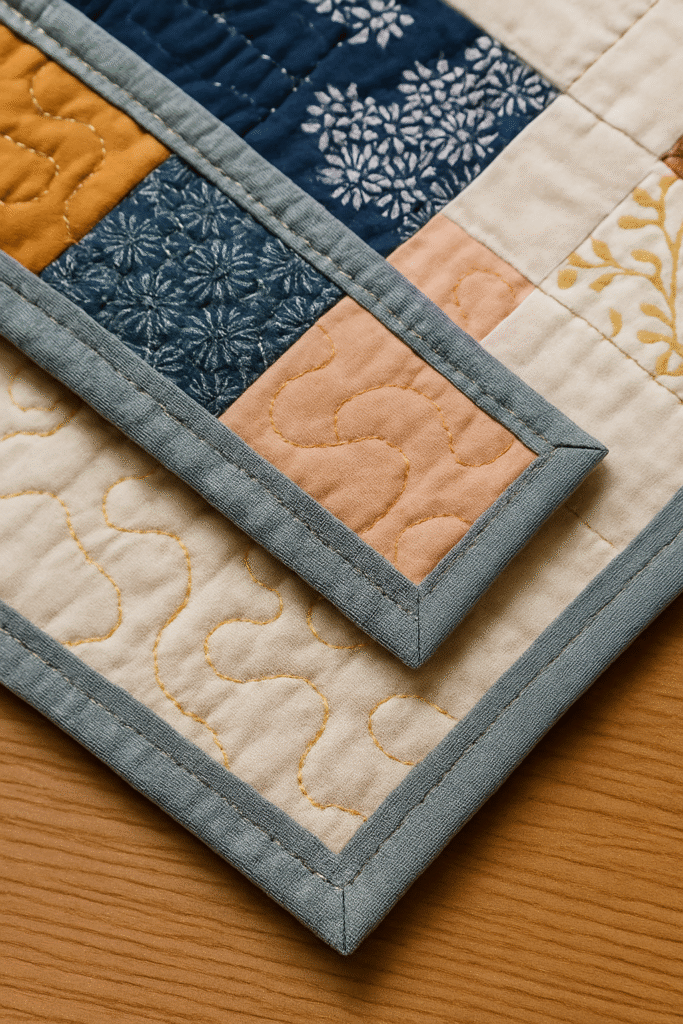
Mitered corners give your quilt a beautiful, professional finish. To create a mitered corner, sew up to a quarter inch from the edge of the first corner, then stop. Fold the binding up at a 45-degree angle, creating a triangular shape. Next, fold it back down, aligning the fold with the quilt’s edge. Continue sewing along the next side. This folding technique ensures the corner will lie flat and crisp once the binding is wrapped to the back.
Joining the Binding Ends
Joining the ends of the binding can seem intimidating, but with a simple method, you can achieve a seamless finish. When you reach the starting point, leave a small gap. Overlap the binding ends by the same width as your original strip (for example, 2½ inches if that was your strip width). Cut one end to that measurement, then join them using a diagonal seam. After pressing the seam open, fold the binding back in place and sew it into the remaining gap.
Wrapping and Hand-Stitching the Binding
After attaching the binding to the front of the quilt, wrap it around to the back. The folded edge should cover the stitching line. Many quilters prefer hand-stitching the binding using a blind stitch because it provides an elegant, nearly invisible finish. Hand-stitching also allows you to control the tension and ensure the binding stays smooth around the quilt’s perimeter. If you prefer machine binding, sew close to the folded edge on the back, making sure to catch the binding evenly on both sides.
Achieving Even Corners and Smooth Edges
Take extra care at the corners, folding the excess fabric into a crisp, clean miter. Secure each corner neatly before continuing to stitch. Throughout the process, avoid pulling the binding too tightly, as this can cause the edges to curve or distort. Smooth, even pressure ensures the binding lies flat and enhances the quilt’s visual appeal.
Choosing Thread and Stitching Techniques
Thread color may match the binding or the quilt top, depending on the look you want. Matching thread blends the stitching seamlessly, while contrasting thread creates a decorative accent. When machine stitching, use a consistent length and tension. When hand stitching, use small, even stitches to maintain durability and beauty.
Tips for Flawless Quilt Bindings
Here are some quick tips to help you achieve perfect bindings every time:
Keep the binding strip consistent in width.
Press seams open to reduce bulk.
Use clips or pins to hold the binding in place while wrapping to the back.
Do not rush corners—take your time to fold them carefully.
Practice on small quilted pieces before binding a large quilt.
Enjoying the Final Step of the Quilting Process
Binding is the finishing touch—the moment your quilt truly comes to life. Although many quilters find this step challenging at first, it becomes one of the most satisfying parts of the craft with practice. A beautifully bound quilt feels polished, professional, and ready to be cherished.