
Quilting is a rewarding and creative craft that allows you to turn fabric into something beautiful, functional, and meaningful. For beginners, the world of quilting may seem overwhelming with its many techniques, tools, and patterns. However, you don’t need advanced skills or expensive equipment to make your first quilt. With simple designs, basic supplies, and a little patience, anyone can create charming quilt projects at home. This guide introduces beginner-friendly quilt projects that help you learn essential techniques while producing items you’ll be proud to keep or gift.
Why Beginner Quilts Are the Best Way to Start
Starting with simple quilt projects helps you build confidence and learn the foundational skills of quilting. Beginners get the chance to practice accurate cutting, consistent stitching, pressing techniques, and assembling pieces. These small skills eventually add up to advanced quilting abilities.
Beginner quilt projects are also:
Affordable
Quick to finish
Perfect for using precuts
Relaxing to make
Ideal for gifting
The best part is that even the simplest quilt looks beautiful when made with care and creativity.
Patchwork Square Quilt
The classic patchwork square quilt is one of the easiest starter projects. It teaches you the basics of piecing, sewing straight seams, and arranging colors.
To begin:
Choose 5″ squares (charm packs) or cut your own
Arrange them in rows
Sew the squares together using a 1/4-inch seam
Press the seams neatly
Piece the rows together
Patchwork quilts allow for endless color combinations and styles. Whether you prefer soft pastels, bold brights, or a scrappy mix, your first quilt will reflect your personal taste.
Rail Fence Quilt
The rail fence pattern is simple but creates a beautiful visual effect. It uses strips of fabric rather than squares, making it quick to assemble.
To create a rail fence block:
Cut several strips of equal width
Sew the strips together
Cut the strip set into squares
Rotate each block to create a “woven” effect
This pattern is forgiving and beginner-friendly, making it perfect for your first larger quilt.
Simple Baby Quilt
Baby quilts are great beginner projects because they require fewer fabrics and less time. A baby quilt can be made using:
Large squares
Wide fabric strips
Panels
Simple blocks
Baby quilts make thoughtful gifts and help you learn quilting on a smaller scale. Cotton fabric and soft batting are ideal for comfort and durability.
Jelly Roll Race Quilt
A jelly roll race quilt is one of the fastest quilts to make, and it only requires one precut jelly roll (40 strips). This project is perfect for beginners because:
There is no complex measuring
The sewing is repetitive and relaxing
The final layout is always unique
You simply sew all the strips together end to end, fold, sew again, and keep repeating until your quilt top is complete. It’s playful, fun, and great for learning.
Nine-Patch Block Quilt
The nine-patch block is another simple and classic beginner block. Each block is made of nine squares arranged in a 3×3 grid. Once you master this block, you can combine colors and patterns for endless variety.
Nine-patch quilts are excellent for practicing:
Color contrast
Accurate cutting
Consistent seam allowance
Pattern layout
This block is a foundation for countless quilt designs.
Strip Quilt with Wide Columns
If you want a modern look without complicated piecing, a strip quilt with wide columns is a great option. Simply cut long fabric strips in different widths and sew them together to form a bold, contemporary quilt.
This type of quilt is:
Beginner friendly
Quick to assemble
Perfect for showcasing large prints
Ideal for home décor
You can vary strip sizes or keep them uniform—both options look beautiful.
Charm Pack Table Runner
A table runner is a perfect small-scale quilt project for beginners. Charm packs (precut 5″ squares) are ideal because they eliminate cutting and ensure accuracy.
To make a charm pack table runner:
Arrange your squares
Sew them together in rows
Add a backing and binding
Quilt simple straight lines
This project helps beginners learn binding and quilting on a smaller piece before moving on to larger quilts.
Quilt-As-You-Go Coasters
Coasters are tiny projects that allow beginners to practice quilting with minimal pressure. Quilt-as-you-go (QAYG) makes the entire process easier by sewing and quilting layers at the same time.
Benefits include:
Fast completion
Great for using scraps
Perfect for learning new stitches
Easy to experiment with colors
They make lovely handmade gifts as well.
Fabric Panel Quilt
Fabric panels often come with beautiful illustrations and can turn into quilts with minimal effort. Beginners simply:
Add borders
Layer the quilt sandwich
Quilt around the designs
This helps learners practice quilting while avoiding complex piecing.
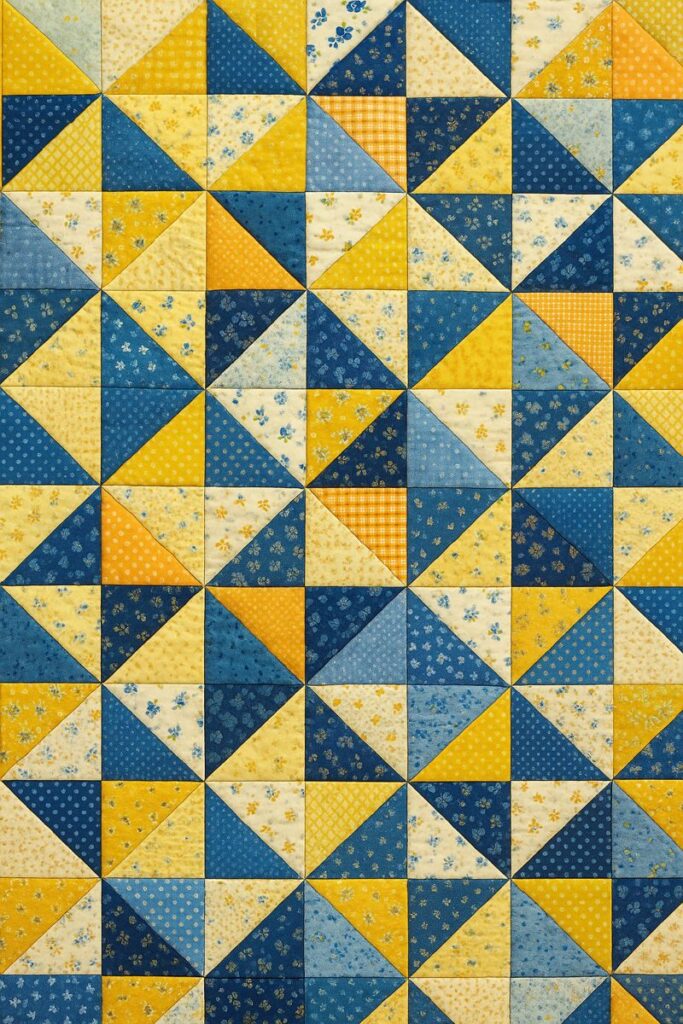
Half-Square Triangle (HST) Mini Quilt
Half-square triangles look advanced, but they’re easy once you learn the technique. Creating a small HST quilt lets beginners practice cutting, sewing diagonally, trimming, and arranging blocks.
HSTs can form patterns such as:
Chevron
Pinwheel
Diamond
Hourglass
A small wall quilt made with HSTs is an excellent first project.
Beginner Quilt Supplies to Get Started
Before starting any project, beginners should have a few essential tools:
Rotary cutter
Cutting mat
Acrylic rulers
Quality quilting cotton
Basic sewing machine
Quilting pins or clips
Iron and ironing board
Batting
Thread
These simple tools are enough for most beginner-friendly quilt projects.
Tips for Success on Your First Quilt
To ensure your beginner quilts look polished:
Use simple patterns
Measure and cut carefully
Maintain a consistent 1/4-inch seam
Press seams—not iron
Start with small projects
Choose fabrics that coordinate
Don’t rush—quilting is relaxing
Even experienced quilters return to simple designs because they are timeless and satisfying.
Final Thoughts
Beginner quilt projects don’t need to be complicated to be beautiful. With simple shapes, basic tools, and clear steps, anyone can create quilts at home—whether for decoration, gifting, or personal use. Each project teaches valuable skills that build your confidence and set the foundation for more advanced quilting in the future. The most important part is enjoying the process, learning at your own pace, and letting your creativity shine through each stitch.