
A pattern notebook is one of the most valuable tools a quilter or crocheter can have. Whether you design your own blocks, modify existing patterns, or simply want an organized place to store ideas, a pattern notebook keeps your creative world structured and accessible. Instead of losing sketches, forgetting measurements, or misplacing your favorite stitch combinations, a notebook allows you to document everything in one place. This guide will teach you how to create your own pattern notebook in a way that supports your workflow, inspires creativity, and becomes a long-term resource for all your quilting and crochet projects.
Why a Pattern Notebook Matters
Crafters often generate dozens of ideas—sometimes more—yet many never reach a project because they aren’t documented. A pattern notebook solves this by giving you a dedicated space to:
Record new design ideas
Save color palettes
Track measurements and templates
Write instructions for future use
Organize ongoing projects
Store swatches and fabric samples
A well-kept notebook also boosts creativity by helping you revisit and refine previous concepts.
Choosing the Right Type of Notebook
You can create a pattern notebook using various formats. The best choice depends on your creative style and how you like to work.
Physical Notebook
A classic paper notebook is perfect for those who enjoy sketching by hand. Choose one with:
Thick pages for gluing swatches
Grid or dot pages for layout planning
A sturdy cover
Plenty of space for expansion
Binder System
A binder allows you to rearrange pages, add templates, or remove outdated designs. It’s perfect if you:
Collect printed patterns
Use sheet protectors
Experiment with organization
Digital Notebook
Digital notebooks offer flexibility and easy editing. You can use apps like Notion, GoodNotes, OneNote, or Google Docs. These tools allow you to store:
Photos of your work
Sketches
Digital color palettes
PDFs
Links and video references
Choose the format that best supports your workflow—or create a hybrid system using both physical and digital tools.
Sections to Include in Your Pattern Notebook
To stay organized, divide your notebook into clear and useful sections. Here are essential categories most crafters include:
Design Ideas
This section is for sketches, doodles, and quick concepts. Even if you don’t have full instructions yet, documenting ideas ensures they won’t be forgotten.
Finished Patterns
Store completed motifs, stitch instructions, measurements, and step-by-step notes. This becomes your personal library of patterns.
Color Palettes
Color is a major part of quilting and crochet. Use this section to save:
Printed color charts
Yarn label samples
Fabric swatches
Digital palettes from online tools
Techniques and Stitch Notes
Record stitches or methods you want to remember, such as:
Special joins
Favorite borders
Custom stitch combinations
Blocking methods
Quilting patterns
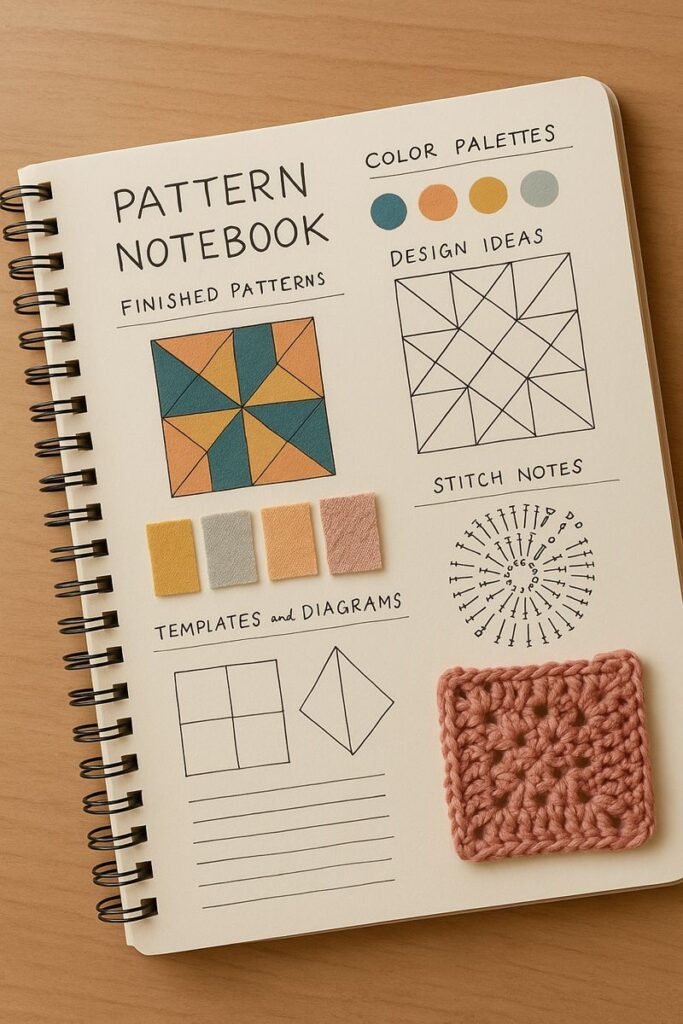
Templates and Diagrams
Add diagrams, shapes, grids, and templates. These help you create consistent blocks, motifs, and appliqué designs.
Fabric and Yarn Inventory
Track what you own, including:
Fabric yardage
Precuts
Yarn weights
Colors and textures
This prevents buying duplicates and helps plan future projects.
Project Planning Pages
Use this area to outline each project:
Materials
Measurements
Deadlines
Progress tracking
Personal notes
These pages help keep multiple projects organized.
Adding Visuals to Your Notebook
Visual elements make your notebook more inspiring and easier to use. Consider including:
Sketches of motifs and blocks
Swatches of stitched samples
Printed photos of finished projects
Cutouts of color combinations
Shape templates for appliqué
Visual references bring patterns to life and help you recreate them accurately later.
How to Record a Pattern Properly
When documenting a pattern, clarity is essential. Write your notes so you—or anyone else—can easily understand and recreate the design.
Include:
Name of the pattern
Skill level
Materials and tools required
Size and gauge
Step-by-step instructions
Stitch counts
Variations and alternative sizes
Helpful tips you learned while testing
Clear documentation saves time and ensures consistent results when you remake the pattern.
Creating a Swatch Library
A swatch library gives you physical samples of your work. For crochet, attach small swatches showing stitch patterns. For quilting, attach fabric swatches or small block samples. Record:
Stitch name
Hook or needle size
Fabric type
Notes about drape or texture
Swatches help you compare options before starting a project.
Documenting Color Experiments
Color is central to your creative process. Dedicate space for:
Testing yarn combinations
Trying fabric pairings
Recording contrast levels
Saving digital or printed color wheels
This section becomes your personal color reference guide.
Keeping Track of Métrics and Measurements
Patterns often require precise dimensions. Use your notebook to track:
Block sizes
Stitch repeats
Border measurements
Binding lengths
Quilt dimensions
Accurate measurement notes help prevent mistakes and streamline future projects.
Tips for Organizing Your Notebook
To maintain a clear and functional notebook:
Use tabs or dividers
Label sections clearly
Review and update often
Remove outdated patterns
Keep a separate area for new ideas
The more organized your notebook is, the easier it becomes to use.
Using Digital Tools with Your Pattern Notebook
Even if you prefer a physical notebook, digital tools can support your creativity. You can:
Take photos of swatches
Store backup versions of patterns
Create digital sketches
Save video links for tutorials
Digital backups protect your work and give you easy access from any device.
Making Your Notebook Inspiring
A pattern notebook should encourage creativity. Decorate it with:
Stickers
Quotes
Color charts
Artistic borders
Images from magazines
Make it a space that feels personal and joyful.
How to Keep Your Notebook Updated
Your creative journey evolves constantly. To keep your notebook useful:
Review it monthly
Add new projects
Remove things you no longer like
Reorganize sections when needed
Your notebook should grow with your creativity.
Final Thoughts
Creating your own pattern notebook is a powerful way to organize your ideas, track progress, and unlock new creativity. It becomes your personal design archive, filled with inspiration, knowledge, and your unique artistic voice. Whether you prefer sketching, writing, collecting swatches, or using digital tools, a well-maintained notebook supports every stage of your quilting and crochet journey. Over time, it becomes one of your most cherished crafting resources—a reflection of your growth, imagination, and passion.