
Quilt appliqué is a beautiful technique that allows quilters to add shapes, motifs, and artistic details onto a quilt top. Whether you prefer flowers, animals, geometric designs, or abstract elements, appliqué offers endless creative possibilities. Many beginners believe appliqué is difficult, but with the right techniques and tools, it becomes simple, enjoyable, and incredibly rewarding. This guide will walk you through how to make quilt appliqué with ease, helping you create designs that look clean, polished, and expressive.
Understanding the Basics of Appliqué
Appliqué is the process of attaching fabric shapes onto a background fabric. These shapes can be sewn by hand or machine and can have raw edges or turned edges. Raw-edge appliqué leaves the edge exposed and is faster, while turned-edge appliqué folds the edge under for a smoother look. Both methods are suitable for beginners with practice.
Start With Simple Shapes
Choosing simple shapes makes your first appliqué projects easier and more enjoyable. Beginner-friendly shapes include:
Hearts
Leaves
Circles
Stars
Simple flowers
Geometric silhouettes
These shapes are easier to cut and stitch, giving you clean results without frustration.
Use Fusible Web for Easy Placement
Fusible web is one of the simplest tools for appliqué. It is a thin sheet of adhesive activated by heat. Using it ensures your shapes stay perfectly in place while you sew.
To use fusible web:
Trace your shape on the paper side
Iron the adhesive onto the wrong side of the fabric
Cut out your shape
Peel the paper backing
Press the shape onto your quilt top
This stabilizes your appliqué pieces and makes stitching more controlled and precise.
Press Carefully for Best Results
When pressing appliqué pieces onto the quilt top, always use a pressing motion—lift and lower the iron rather than sliding it. Sliding can stretch the fabric or move your design out of place. Pressing keeps edges crisp and secure.
Stabilizers Help With Smooth Stitching
Stabilizers prevent puckering and stretching as you sew around your appliqué shapes. Useful options include:
Tear-away stabilizer
Wash-away stabilizer
Lightweight fabric interfacing
Place the stabilizer under the quilt top before sewing to keep your stitches even.
Choose the Right Stitch
There are several ways to stitch appliqué pieces, and you can choose the one that matches your style and skill level.
Zigzag Stitch
This stitch is fast, strong, and perfect for raw-edge appliqué. Adjusting the width and length changes the look from subtle to bold.
Blanket Stitch
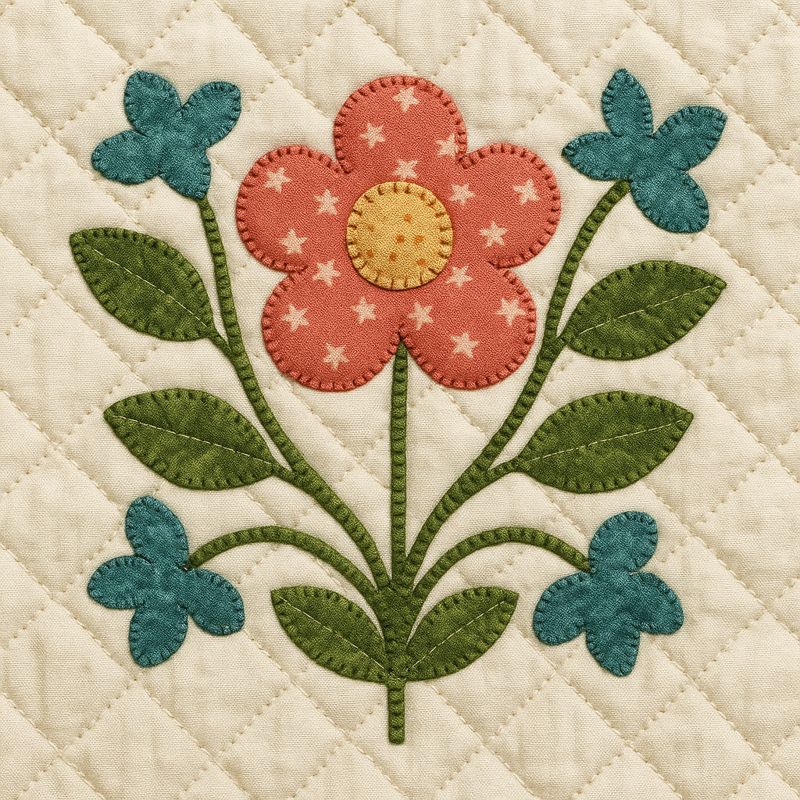
A decorative favorite, the blanket stitch creates a lovely handmade look. Most sewing machines have a built-in blanket stitch option.
Straight Stitch
A straight stitch works beautifully for raw-edge appliqué when you want a soft frayed look over time. It’s also very beginner-friendly.
Hand Stitching
Hand appliqué uses small, almost invisible stitches. It requires patience but gives elegant, classic results.
Choose the stitch that feels most comfortable for your style and project.
Use the Right Thread and Needle
Your stitching will look cleaner when you use the correct thread and needle. For machine appliqué:
Use a sharp needle (70/10 or 80/12)
Choose cotton or polyester thread
Use a thread color that blends with your appliqué
For hand appliqué, use fine needles and smooth, lightweight thread.
Slow, Steady Sewing Makes a Difference
Sewing too quickly can cause uneven stitching or shifting shapes. Take your time, especially around curves and corners. Smooth, slow stitching always looks more polished.
Clip Curves and Points When Needed
If you are doing turned-edge appliqué, clipping curves helps the fabric lie flat. Clip inward curves and notch outward curves so your shape forms clean lines. Raw-edge appliqué usually doesn’t require clipping.
Practice on Scrap Fabric
Before stitching on your quilt top, try your chosen stitch on a scrap piece of fabric. Adjust your stitch width, length, and tension until you like the result. This builds confidence and helps you achieve clean, beautiful appliqué edges.
Templates Improve Accuracy
Templates help you trace and cut shapes consistently. You can use:
Cardstock
Plastic templates
Heat-resistant template material
Printable appliqué shapes
Templates give you clean edges and repeatable shapes, especially for patterns with multiple pieces.
Secure Without Pins (Optional)
If you prefer not to pin your appliqué pieces, you can use washable fabric glue. Glue basting holds shapes in place while you sew and leaves no holes in the fabric. Use sparingly to avoid stiffness.
Work One Piece at a Time
Large appliqué scenes can feel overwhelming if you try to place everything at once. Instead:
Lay out the entire design first
Press and stitch one shape
Move to the next
This keeps your project organized and manageable.
Use the Right Background Fabric
Stable fabrics like quilting cotton provide the best support for appliqué. Avoid stretchy or loosely woven fabrics, as they can distort under stitches.
Focus on Progress, Not Perfection
Every appliqué project improves your skills. Small variations in stitching or placement are a natural part of handmade work and add charm to your quilt. With each project, your edges will become smoother and your techniques more refined.
Finishing Touches Matter
After completing your appliqué, finish with:
A gentle press
Trimming loose threads
Removing stabilizer
Squaring your block
These steps give your quilt a polished look and prepare it for assembly.
Final Thoughts
Appliqué is a wonderful technique that allows quilters to express creativity through shapes, color, and texture. By using fusible web, simple stitches, stabilizers, and patient techniques, anyone can create beautiful appliqué designs with confidence. Whether you’re adding a small motif or designing an entire scene, appliqué adds personality and artistry to your quilting projects. With practice and the right approach, your appliqué will look clean, smooth, and professionally finished.