
Organic-shaped quilt designs are inspired by the curves, movements, and flowing forms found in nature. Unlike traditional quilting, which often relies on straight lines and geometric precision, organic designs embrace irregularity, softness, and fluidity. These quilts can evoke natural landscapes, waves, leaves, petals, or abstract shapes that feel harmonious and soothing. Whether you’re a beginner looking to explore creative layouts or an experienced quilter wanting to break free from rigid blocks, organic quilting opens the door to endless artistic expression. This guide explores a variety of organic-shaped quilt design ideas to inspire your next project.
Why Choose Organic Quilt Designs?
Organic quilts encourage creativity and intuition. Instead of following strict measurements and block structures, you can experiment with improvisation, freeform curves, and natural shapes. These quilts:
Feel artistic and expressive
Work well with modern or minimalist décor
Allow for creative mistakes that blend seamlessly
Often use fewer precise tools and formulas
Organic quilts offer a relaxed and freeing approach to quilting, making them perfect for quilters who want to add a sense of movement to their work.
Curved Piecing Without Fear
Curved piecing may seem intimidating, but it can be surprisingly accessible with practice. Organic curves do not need to be perfect—they simply need to flow. You can create:
Soft waves
Gentle arcs
Undulating horizontal sections
Curvy transitions between fabric colors
Start with large, simple curves. Cut two fabrics together to ensure they fit naturally. Avoid sharp or tight curves when beginning to keep the sewing process smooth.
Improvisational Curved Strips
Improvisational (improv) quilting is ideal for organic shapes. Instead of measuring, you cut freehand curves and piece them together. This creates flowing, unique shapes every time. Improv curved strips can be used to mimic:
Rolling hills
Rivers or flowing water
Wind patterns
Natural landscapes
These designs are excellent for expressive wall quilts or modern throw quilts.
Organic Appliqué Shapes
Appliqué is one of the easiest ways to create organic shapes without piecing. You can cut natural, flowing shapes and attach them to your quilt top using:
Raw-edge appliqué
Turned-edge appliqué
Fusible web
Popular organic appliqué ideas include:
Overlapping leaves and vines
Petals and abstract flowers
Soft oval and circular shapes
Freeform spirals
Layering appliqué pieces can add depth and texture to your quilt.
Nature-Inspired Patterns
Organic shapes often mimic elements from nature. These motifs are gentle, recognizable, and visually appealing. Consider designing quilts inspired by:
Ocean waves
Pebble patterns
Sand dunes
Tree rings
Mountain outlines
Raindrop shapes
These patterns help you create quilts that feel calming and connected to the outdoors.
Soft Abstract Shapes
You don’t have to represent specific objects—abstract shapes can also create organic beauty. Try using:
Irregular ovals
Freeform crescent shapes
Soft-edged patches
Random curves in varying sizes
Mixing shapes with different scales (large and small) creates depth and visual interest.
Ombre Organic Quilts
Gradients pair beautifully with organic shapes. Combining curved piecing or appliqué with ombre color transitions can evoke:
Sunset skies
Ocean depth
Forest shadows
Desert horizons
Using fabrics of slowly transitioning shades enhances the organic movement of the quilt.
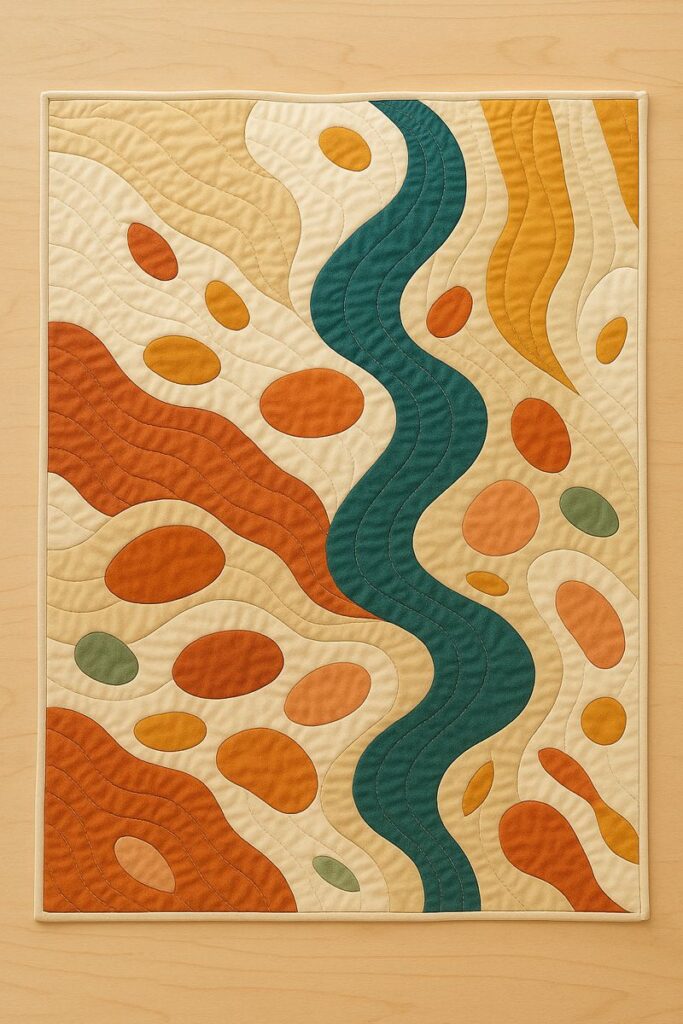
S-Curves and Wave Patterns
S-curves provide dynamic movement and are beginner-friendly. Whether created through piecing or appliqué, S-curves can symbolize:
Flowing water
Gentle breezes
Shifting sand
Natural movement
These patterns are perfect for lap quilts, runners, and wall hangings.
Layered Organic Designs
Layering shapes creates dimension and complexity without requiring perfect alignment. You can use transparent or semi-transparent fabric effects, or simply layer bold colors. Some ideas include:
Stacked petals
Layered waves
Overlapping circles
Organic collage-style layouts
This approach resembles modern art and works beautifully in contemporary homes.
Freehand Cutting Techniques
Freehand cutting removes the need for rulers, letting your creativity lead. Cut shapes intuitively and place them on the quilt top until you find a composition you love. Freehand cutting works especially well for:
Leaf clusters
Abstract forms
Curved geometric shapes
Landscape-inspired designs
This method eliminates the pressure of precision and embraces spontaneity.
Wholecloth Quilts With Organic Quilting Lines
Organic designs don’t have to come from piecing. You can create stunning effects using quilting lines alone. Wholecloth quilts feature a single piece of fabric, with the design created entirely by stitching.
Popular organic quilting motifs include:
Swirls
Pebbles
Shell patterns
Wave lines
Leaf veins
These stitches add texture and elegance without requiring multiple fabrics.
Using Batiks and Hand-Dyed Fabrics
Hand-dyed and batik fabrics naturally complement organic quilt designs. Their irregular patterns, soft gradients, and flowing textures enhance curved or abstract shapes. They work well for:
Ocean-inspired quilts
Forest and leaf quilts
Earth-toned abstract designs
Nature-themed wall hangings
Let the fabric guide your design choices—it often suggests organic movement on its own.
Mixing Textures for Organic Effects
Different fabric textures can add depth to organic quilts. Consider combining:
Smooth cotton with linen
Textured prints with solids
Woven fabrics with hand-dyed pieces
Printed organic motifs like leaves or swirls
Texture variation adds richness and a natural feel to the quilt.
Organic Borders
Rather than traditional straight borders, try borders with:
Soft curves
Wavy edges
Irregular width strips
Organic appliqué vines
These borders frame the quilt in a more artistic and flowing way.
Tips for Creating Organic Quilt Designs
To make the process enjoyable and natural:
Work slowly and intuitively
Embrace irregularities—they add charm
Use high-contrast colors for bold shapes
Use low-contrast colors for calm, soft designs
Sketch loosely, then improvise
Let the fabric inspire the composition
Organic quilting thrives on freedom rather than strict rules.
Final Thoughts
Organic-shaped quilt designs bring softness, movement, and artistic expression to your quilting practice. Whether made through curved piecing, appliqué, improv techniques, or creative quilting lines, organic shapes add a natural and harmonious feeling to any quilt. These designs are perfect for modern quilters who enjoy experimenting, relaxing, and letting the quilt evolve naturally. With the ideas in this guide, you can create quilts that feel flowing, expressive, and deeply connected to the beauty of organic form.