
Crochet is a relaxing and creative craft that allows beginners to make beautiful handmade items with just a few basic stitches. Whether you want to create gifts, home décor, or cozy accessories, crochet offers endless possibilities. Starting with simple patterns helps you build skills, understand stitch structure, and gain confidence with your hook and yarn. This guide highlights beginner-friendly crochet patterns that are easy to follow and rewarding to finish, even if you’re picking up a hook for the first time.
Why Start With Simple Crochet Patterns?
Learning crochet begins with mastering basic stitches and techniques. Simple patterns allow you to practice essential skills without feeling overwhelmed. They use straightforward construction, minimal shaping, and repetitive stitches that help you understand tension and consistency. These patterns are perfect for beginners because they can be completed quickly, giving you a sense of accomplishment while building knowledge for more advanced projects.
Choosing the Right Yarn and Hook
Before starting any beginner-friendly crochet pattern, selecting the right materials makes a big difference. Medium-weight yarn (also known as worsted weight) is ideal for beginners because it’s easy to handle and shows stitch definition clearly. Pair this yarn with a hook between sizes 5 mm (H-8) and 6 mm (J-10). Larger hooks and thicker yarn help beginners learn more easily by producing visible stitches that are easy to count. Avoid novelty yarns, fluffy yarns, or overly textured yarns when starting—they can make stitches difficult to see.
Learning the Basic Stitches
Most beginner crochet patterns rely on a few foundational stitches: the chain stitch, the single crochet, the half double crochet, and the double crochet. The chain stitch creates the foundation row. Single crochet produces a dense, tight fabric perfect for washcloths or amigurumi. Half double crochet offers a slightly taller stitch that works well for scarves and blankets. Double crochet creates a more open and airy fabric and is often used in shawls and simple garments. Once you become comfortable with these stitches, you’ll be able to create a wide range of beginner-friendly projects.
Beginner Pattern: Simple Crochet Dishcloth
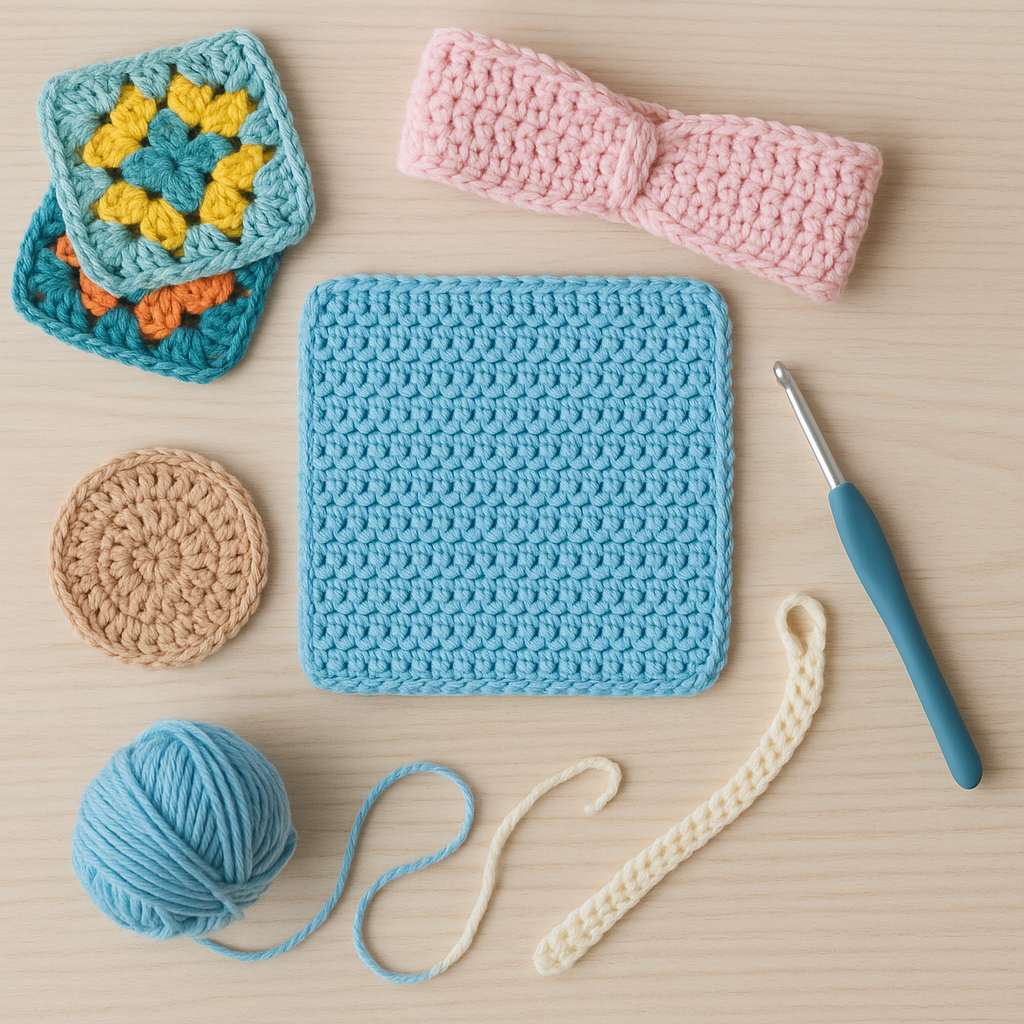
One of the easiest and most practical crochet projects for beginners is a dishcloth. Dishcloths use basic stitches, work up quickly, and make great gifts. To make a simple dishcloth, chain enough stitches to measure your desired width. Then work single crochet stitches across each row until the piece is square. Cotton yarn is the best choice because it absorbs water well and holds up to repeated washings. Dishcloths allow beginners to practice consistency in tension and stitch height.
Beginner Pattern: Crochet Scarf
A crochet scarf is another excellent project for beginners. Scarves give you plenty of space to practice stitches without worrying about shaping or increasing. A simple pattern might use double crochet stitches worked back and forth in rows. To create a scarf, chain the length you want and work the same stitch pattern until the scarf reaches your preferred width. Using a soft, medium-weight yarn makes the project enjoyable and the finished scarf cozy and functional.
Beginner Pattern: Granny Squares
Granny squares are iconic in the crochet world and perfect for beginners who want to learn working in the round. These squares start with a small loop and expand outward using clusters of double crochet stitches. Granny squares are versatile—make just one for a coaster, several for a pillow cover, or dozens for a blanket. Because each square is small, they’re great for practicing tension and color changes. You can also use leftover yarn scraps to create vibrant and unique combinations.
Beginner Pattern: Crochet Headband
A simple crochet headband is quick to make and requires only basic stitches. Many beginner patterns use half double crochet because it creates a stretchy fabric. To create a headband, chain enough stitches to fit comfortably around your head, then crochet rows until the band reaches your desired width. Sew the ends together to finish. Headbands are a great way to learn how crochet fabric behaves and how to maintain consistent tension throughout your work.
Beginner Pattern: Crochet Coasters
Coasters are small, fun projects that help beginners practice working in the round and counting stitches. Many coaster patterns start with a magic ring or initial chain and use single or double crochet stitches to build circular or square designs. Cotton yarn is ideal for coasters because it absorbs moisture well. Since coasters are small, they’re quick to finish and perfect for using leftover yarn. They also make excellent handmade gifts.
Beginner Pattern: Simple Baby Blanket
A simple baby blanket is a wonderful project once you feel comfortable with basic stitches. Baby blankets are smaller than full-size blankets, making them manageable for beginners. Choose a stitch like half double crochet or double crochet for a soft and drapey texture. Chain the width you want, then crochet rows until the blanket reaches your desired length. Using soft acrylic or cotton yarn ensures the blanket is gentle and washable. Baby blankets offer plenty of practice while producing something truly meaningful.
Beginner Pattern: Crochet Mug Cozy
Mug cozies are cute, functional projects that help beginners practice shaping with very minimal complexity. Typically, you crochet a rectangle using single or half double crochet stitches, then sew the ends together, leaving an opening for the mug handle. You can finish it with a button closure or leave it stretchy. Mug cozies teach beginners how to measure crochet fabric and how to work small finishing techniques.
Beginner Pattern: Simple Crochet Bookmark
Crochet bookmarks are perfect for beginners who want a quick, satisfying project. They often use chain stitches combined with single or double crochet to form a thin, flat strip. You can embellish a bookmark with tassels or small flowers once you feel comfortable. Bookmarks help beginners practice controlling tension and maintaining even edges.
Understanding Gauge in Crochet
Even simple patterns become easier when you understand gauge. Gauge refers to how many stitches and rows fit within a certain measurement. It affects the size and fit of your project. While gauge is less important for dishcloths or scarves, it becomes more important when making wearable items or pieces that need specific dimensions. To check gauge, crochet a small swatch following the pattern’s stitch instructions. Adjust your hook size if your stitches are too big or too small. Learning gauge early helps you avoid frustration in more advanced projects.
Finishing Your Crochet Projects
Finishing touches can make a big difference in the appearance of your crochet projects. Weaving in yarn ends neatly helps prevent pieces from unraveling. Blocking your project—shaping and gently stretching it using water or steam—helps even out stitches and improve the overall look. Simple finishing techniques elevate even the most basic beginner project.
Building Your Confidence as a Beginner
As a beginner, it’s normal to feel unsure about your stitches or frustrated when a pattern doesn’t go as planned. The key is to practice consistently. Because crochet is repetitive, your skills will improve quickly as your hands get used to the movements. Start with short, manageable projects and gradually take on larger pieces. Each finished item helps you grow your confidence and develop your personal style.
Enjoying the Creative Process
Crochet is more than just crafting—it’s a relaxing, meditative experience that allows you to express your creativity. Simple crochet patterns offer a gateway into a hobby that can last a lifetime. Whether you’re making something practical or decorative, every stitch is a step toward becoming a skilled crocheter. Take your time, enjoy the journey, and celebrate your progress as you explore this rewarding craft.