
Every quilter, from beginner to experienced maker, encounters mistakes along the way. Quilting is a craft that requires precision, patience, and practice, so it’s natural to experience challenges while learning. The good news is that most quilting mistakes are predictable, easy to identify, and even easier to prevent once you understand why they happen. Knowing these common pitfalls will help you improve your skills, avoid frustration, and enjoy a smoother quilting experience. This guide explores the most frequent quilting mistakes and offers practical solutions to help you create beautiful quilts with confidence.
Cutting Fabric Inaccurately
One of the most common mistakes in quilting is inaccurate cutting. Even the smallest measurement errors can cause blocks not to line up, seams to mismatch, and the quilt top to look uneven. This usually happens when fabric shifts during cutting, when rulers aren’t held firmly, or when the rotary cutter blade is dull. To avoid this, always press your fabric first so it lies completely flat. Use a sharp blade and place your ruler securely on the fabric before cutting. Make slow, steady cuts, and double-check measurements before trimming. Accurate cutting lays the foundation for accurate piecing.
Using an Inconsistent Seam Allowance
A consistent quarter-inch seam allowance is essential for quilting. When your seams are too wide or too narrow, blocks become the wrong size, causing misalignment and frustration. Many beginners assume their machine’s foot automatically creates a quarter-inch seam, but this isn’t always true. To prevent this mistake, measure your machine’s seam allowance using a ruler and adjust as needed. Consider using a quarter-inch presser foot or marking a guide on your machine’s throat plate. Practicing straight seams at a comfortable speed also helps build consistency.
Forgetting to Press Seams Properly
Pressing is different from ironing, yet many beginners treat them the same. Ironing involves sliding the iron back and forth, which can stretch the fabric and distort seams. Pressing, on the other hand, uses an up-and-down motion that sets seams without stretching them. Failing to press seams properly can lead to bulky seams, twisted blocks, or shapes that don’t fit together. Press each seam immediately after sewing and decide whether to press it open or to one side based on your pattern. A well-pressed block is easier to sew accurately and makes your quilt top look more polished.
Sewing Too Quickly
Quilting requires control more than speed. Many beginners sew too fast, causing fabric to shift, seams to curve, or points to mismatch. Sewing quickly can also make it harder to maintain a consistent seam allowance. Slow down and allow the machine to guide the fabric smoothly under the needle. Speed control settings on your machine can also help you maintain a steady pace. Taking your time leads to cleaner, more accurate stitching.
Ignoring Fabric Grain
Fabric grain matters in quilting. Cutting against the grain or on the bias without realizing it can cause fabric to stretch or distort when sewing. Biased edges—those cut at a 45-degree angle—stretch more than straight-grain edges, leading to uneven blocks. To avoid this, always align your fabric carefully before cutting, and be aware of how your pattern uses triangles or diagonal cuts. Handle triangles gently and avoid pulling or stretching edges while sewing.
Skipping Block Trimming
Trimming blocks is a simple yet often overlooked step. When blocks aren’t trimmed to the correct size, they cause misalignment in the quilt top. This results in wobbly seams, uneven rows, and a quilt that won’t lie flat. Trimming ensures each block matches the pattern’s measurements and fits together properly. Use a square ruler to trim blocks and check accuracy frequently as you work. It may seem like an extra step, but trimming saves time and frustration later.
Choosing Low-Contrast Fabrics Unintentionally
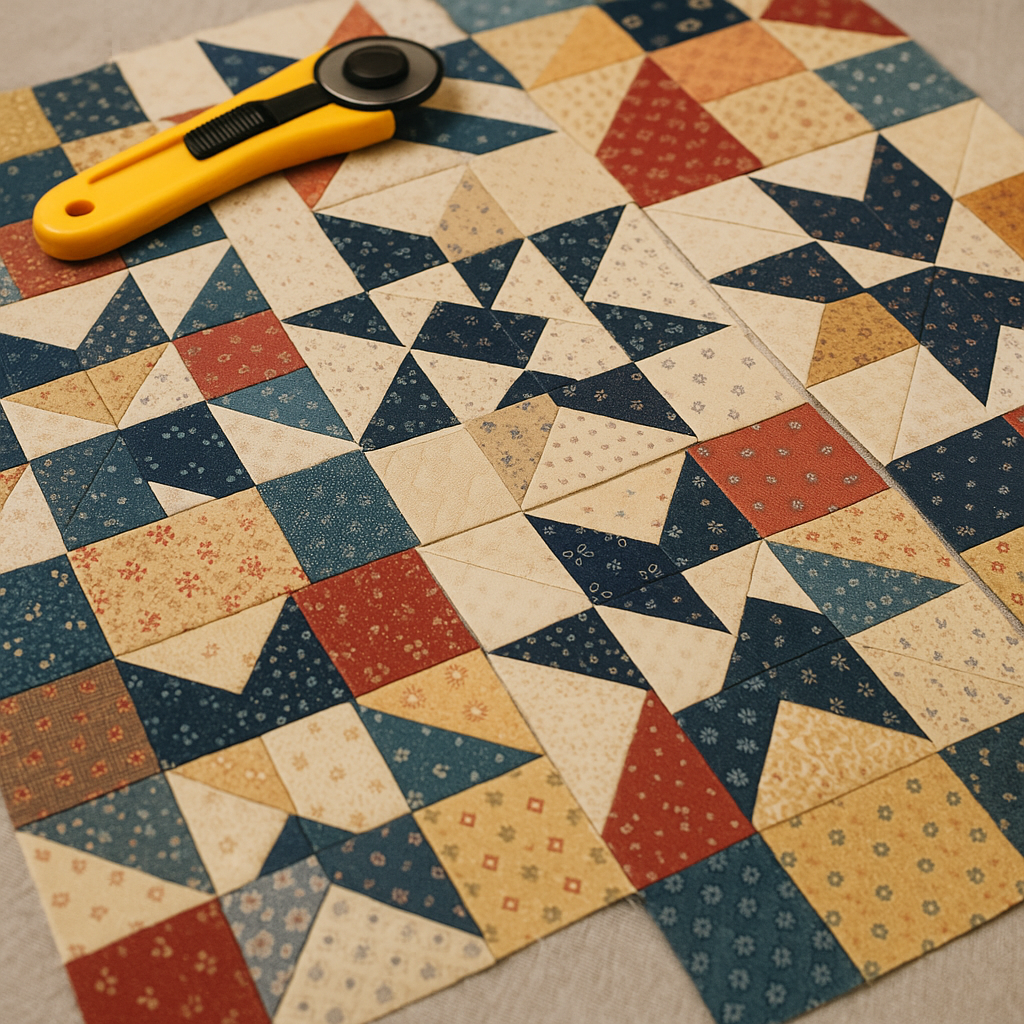
Color contrast plays a huge role in how quilt patterns appear. Using fabrics with values that are too similar can make your design look muddy or flat. Without contrast, shapes blend together, and important details disappear. To avoid this mistake, sort fabrics into light, medium, and dark values before choosing your palette. Taking a black-and-white photo of your fabrics helps you see contrast clearly. Thoughtful value placement enhances your quilt’s overall impact.
Not Squaring Your Quilt Top
Many quilters forget to square their quilt tops before layering and quilting. A quilt top that isn’t square will cause ripples, uneven borders, and difficulty during quilting. After assembling your blocks and borders, use a large ruler or square to check the corners and edges. Trim any excess fabric to ensure everything is aligned. Squaring your quilt top results in cleaner quilting and smoother binding.
Overhandling Fabric
Handling fabric too much can stretch it, distort seams, or cause fraying. This is especially true when working with bias edges or delicate prints. When sewing, avoid pulling or tugging on the fabric. Guide it gently and let the machine feed it naturally. Press seams carefully without excessive force, and handle quilt blocks by their edges rather than grabbing and twisting them.
Using the Wrong Thread or Needle
Choosing the wrong thread or needle can lead to skipped stitches, uneven seams, or even damage to the fabric. Quilting cotton works best with high-quality cotton thread or fine polyester thread. A universal or quilting needle in size 80/12 or 90/14 is typically ideal for piecing. If your thread breaks frequently or your stitches look uneven, your needle may be dull or incorrect for the fabric. Change needles regularly for smooth stitching and better results.
Not Testing Tension Settings
Incorrect thread tension is a subtle mistake that can affect the overall quality of your quilt. Too-tight tension can cause puckering, while too-loose tension can create loops on the underside of the fabric. Always test your tension on a scrap piece of fabric made from the same materials you’ll be using in your quilt. Adjust as needed until the stitches look balanced on both sides.
Forgetting to Stay Organized
Quilting involves many small pieces, tools, threads, and steps. Without organization, it’s easy to misplace pieces, sew rows in the wrong order, or use the wrong fabric in a block. To avoid this mistake, label block pieces, store units in small trays or bags, and keep pattern instructions nearby. A tidy workspace helps you stay focused and reduces errors.
Rushing the Quilting or Binding Stage
The final stages of creating a quilt are just as important as the piecing. Rushing through quilting can lead to tension issues or uneven stitching, while rushing through binding can affect the overall look of the quilt. Take your time with these finishing steps. Whether you’re quilting straight lines or free-motion designs, sew slowly and steadily. When binding, cut your strips evenly, sew your corners carefully, and hand-stitch the back for a clean finish.
Being Too Hard on Yourself
Every quilter makes mistakes—even experts. Many beginners feel discouraged when seams don’t match or blocks aren’t perfect, but mistakes are a natural part of the learning process. Instead of striving for perfection, focus on progress. Each quilt teaches new skills and builds confidence. Imperfections add personality and charm, reminding you that quilting is a handmade art form.