
Crocheting evenly is one of the most important skills for creating beautiful, professional-looking projects. Beginners often struggle with uneven stitches, changing tension, wobbly edges, or fabric that looks looser in some spots and tighter in others. Even experienced crocheters can occasionally lose consistency when switching yarns, trying new stitches, or working on large projects over many days. The good news is that evenness in crochet is a skill that improves with awareness and practice. With a few simple adjustments, you can dramatically improve the look and feel of your work. This guide explores effective tips that will help you make your crochet more even and consistent.
Understand What Tension Really Means
Tension refers to how tightly or loosely you hold your yarn as you crochet. If you pull too tightly, your stitches become small, stiff, and difficult to work into. If you hold the yarn too loosely, your stitches become large, floppy, and uneven. Everyone has a natural tension, but many beginners unintentionally change their tension from row to row. The key is to learn what tension feels comfortable for you and maintain it throughout your project. Pay attention to how the yarn flows through your fingers, and try to keep the same amount of pressure as you work.
Practice Holding Your Yarn the Same Way
Many tension problems come from inconsistent yarn handling. Crocheters use a variety of methods to hold the yarn, and there’s no single “correct” technique. What matters is choosing a grip that feels natural and repeating it every time you crochet. Some people wrap the yarn around their fingers; others let it rest loosely between them. Experiment until you find a method that allows the yarn to glide smoothly but not slip uncontrollably. Once you find your preferred hold, practice maintaining it through long stretches of stitching.
Maintain a Steady Pace While Crocheting
Your speed affects your stitch consistency. When you rush, your tension often tightens, resulting in smaller stitches. When you slow down too much, your stitches may become loose. Working at a steady pace helps you keep your stitches uniform. Even if you enjoy crocheting quickly, try to maintain the same rhythm throughout. If you feel yourself speeding up or slowing down, pause, reset your pace, and continue with awareness.
Choose the Right Hook for Your Yarn and Style
Hook size plays a major role in stitch consistency. If your stitches are too tight, try going up a hook size. If they’re too loose, try a smaller hook. The material of the hook also affects your tension. Metal hooks allow yarn to glide easily, which can lead to looser stitches. Wooden or bamboo hooks create more friction, helping beginners control their yarn better. Some crocheters find that ergonomic hooks reduce hand fatigue, which improves their consistency. Don’t be afraid to experiment until you find the hook that feels right for your hands and your yarn.
Practice Making Swatches Before Starting a Project
Swatching isn’t only for checking gauge—it also trains your hands to stay consistent. When you practice a stitch before starting a full project, you teach your muscles the correct movements. This helps you develop a natural rhythm and improves evenness. Spend a few minutes making small swatches when you’re learning a new stitch or using a new yarn. Swatching is a small step that makes a big difference in stitch consistency.
Keep the Same Hook Position and Motion
Crochet involves precise hand movements. If your angle or motion changes frequently, so will your stitches. Try to keep your hook facing the same direction as you insert it, yarn over, and pull through loops. Smooth, repeated motions lead to more uniform stitches. Beginners often twist the hook unpredictably, which can change the height or tension of the stitch. Pay attention to how your hook moves and try to repeat the same motion row after row.
Count Your Stitches Regularly
Uneven stitch counts can create lopsided edges, uneven shapes, and inconsistent tension. This is especially common when you accidentally add or skip stitches at the edges. Counting your stitches at the end of every row or round helps you catch mistakes early. If your stitch count is off, fix it before continuing. Consistent stitch counts result in more even fabric and a better-looking finished project.
Use Stitch Markers to Keep Edges Straight
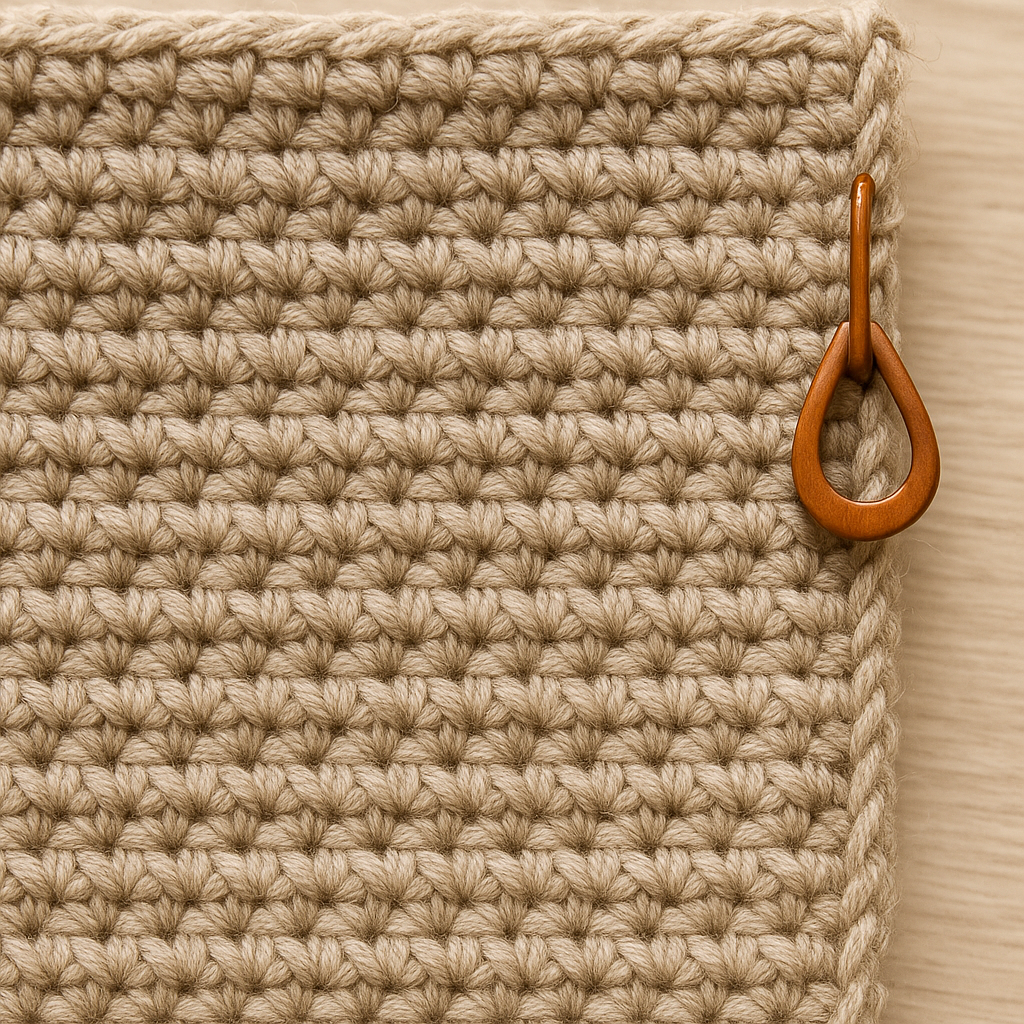
Uneven edges are one of the most common challenges for beginners. Placing a stitch marker in the first and last stitch of every row helps you identify where to insert your hook. This prevents accidental increases or decreases and keeps your work straight. Stitch markers are especially helpful when working with stitches that hide their edges, such as single crochet or half double crochet. Keeping your edges straight improves the overall look of your project.
Block Your Finished Pieces
Blocking is a simple but powerful technique for improving consistency. It involves using water or steam to relax your stitches and reshape your fabric. Blocking helps even out tension, flatten curl, and make stitches appear more uniform. It’s especially useful for lace, motifs, and textured projects. Whether you wet block, steam block, or spray block depends on your yarn, but blocking always enhances the appearance of your finished crochet.
Avoid Switching Hooks During a Project
Even if two hooks are labeled the same size, they may differ slightly in shape or diameter depending on brand and material. Switching hooks in the middle of a project can cause visible differences in stitch size. Choose one hook and stick with it from beginning to end. If you take breaks from your project, store your hook with it so you don’t accidentally use a different one later.
Take Breaks to Prevent Hand Fatigue
Hand fatigue affects tension and stitch consistency. When your hands get tired, you may grip the hook or yarn more tightly, creating tight stitches. Or you may relax too much, creating loose stitches. Taking regular breaks helps your hands stay relaxed and flexible. Stretch your fingers, shake out your hands, and return to the project when you feel comfortable. Crocheting with relaxed hands naturally produces more even stitches.
Work with Good Lighting and a Comfortable Setup
Poor lighting can make it difficult to see your stitches, causing mistakes and uneven tension. Make sure your crochet area is well-lit, preferably with natural light or a bright lamp. Sit comfortably with good posture to avoid hand strain. A comfortable setup helps you crochet with confidence and consistency.
Practice Mindful Crocheting
Crochet is a rhythmic craft. Paying attention to the way your hands move, the feel of the yarn, and the pace of your stitches improves the evenness of your work. Mindful crocheting encourages a deeper connection with your project and helps you notice when something feels off. Taking a moment to breathe, relax your shoulders, and adjust your tension makes a big difference.
Celebrate Progress, Not Perfection
Every crocheter experiences uneven stitches—it’s part of the learning process. Your tension will improve with practice, patience, and awareness. Celebrate the progress you make with each project. Small changes in consistency accumulate over time, transforming your crochet into something beautifully even and polished. Enjoy the journey and trust that your hands will grow more skilled with every stitch.