
Quilting is one of the oldest textile traditions in the world, and many of its classic patterns have been passed down through generations. These traditional quilt designs carry history, symbolism, and cultural meaning, telling the stories of the people who made them. Whether stitched by hand or machine, these patterns serve as a bridge between past and present, connecting today’s quilters to centuries of craftsmanship. Understanding the origins and stories behind traditional quilt patterns not only enriches the craft but also inspires new creativity. This guide explores some of the most beloved traditional quilt patterns and the histories that make them timeless.
Log Cabin Quilt
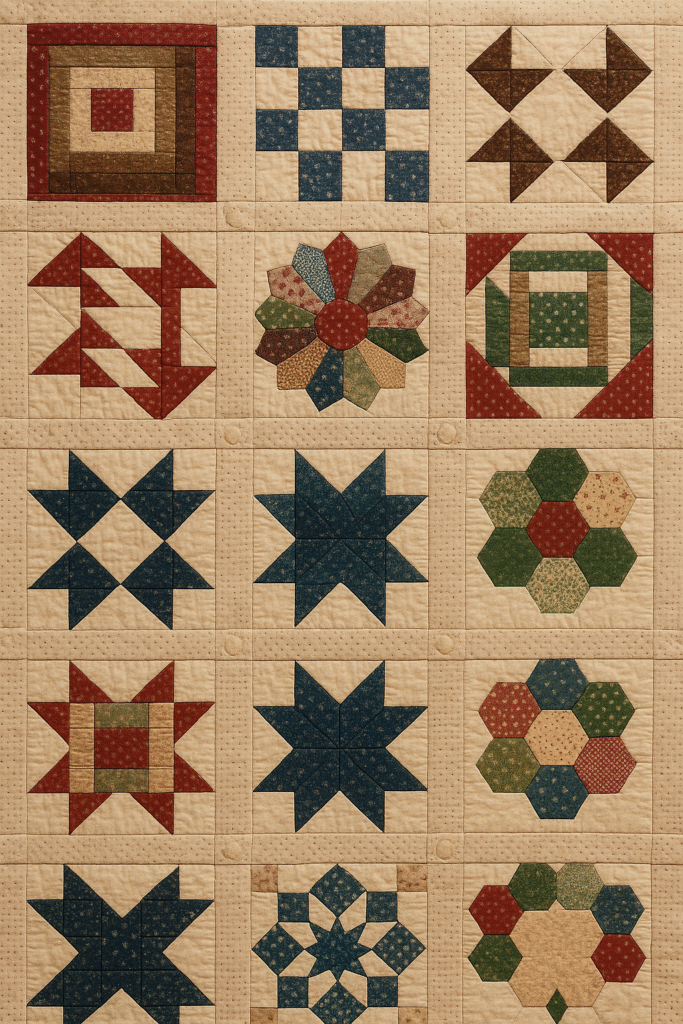
The Log Cabin pattern is one of the most recognizable and meaningful designs in quilting history. It features a central square, often red, representing the hearth—the warm heart of the home. Strips of fabric, known as “logs,” are sewn around the center in contrasting light and dark colors. Light fabrics symbolize the sunny side of life, while darker tones represent hardship or shadows. Log Cabin quilts became popular in the 1800s and were associated with stability, family, and pioneering life. Today, the pattern remains a favorite for its structure, symbolism, and endless layout variations such as Barn Raising, Courthouse Steps, and Pineapple.
Nine Patch Quilt
The Nine Patch is one of the simplest and oldest quilting patterns, making it a staple among early American quilters. It involves nine squares arranged in a three-by-three grid. Because it used small pieces of fabric, the pattern was ideal for scrap quilts made from leftover clothing or feed sack materials. During the 19th century, quilting was a practical necessity, and the Nine Patch offered efficiency and versatility. Despite its simplicity, variations such as Double Nine Patch and Disappearing Nine Patch allow for stunning design possibilities. The pattern symbolizes resourcefulness and community, as many early Nine Patch quilts were made during social quilting gatherings.
Flying Geese
The Flying Geese pattern features triangular units arranged to look like migrating geese in flight. This pattern has roots in both practicality and symbolism. Traditionally, Flying Geese blocks were used to create directional patterns, guiding the eye across the quilt. Some historians speculate that Flying Geese may have held significance in quilts made during the Underground Railroad era, helping symbolize navigation northward. Whether or not these theories are fully proven, the pattern has long been associated with movement, freedom, and journey. Its strong geometric lines also make it popular in modern quilting.
Dresden Plate
The Dresden Plate pattern, with its circular flower-like design, rose to popularity in the 1920s and 1930s. It features petal-shaped pieces arranged around a circle, often in soft pastels or floral prints. The name “Dresden” was inspired by the elegant porcelain designs from Dresden, Germany. This quilt block symbolizes beauty, domestic life, and craftsmanship. Dresden Plate quilts often include elaborate applique and hand stitching, showcasing the maker’s skill. Today, it remains a cherished pattern for its charm and vintage appeal.
Bear Paw
The Bear Paw pattern dates back to the early 1800s and is believed to symbolize courage, strength, and protection. The pattern features a central square surrounded by triangular “claws,” forming a block that resembles the footprint of a bear. Pioneer women often made Bear Paw quilts as gifts to families heading westward, symbolizing guidance and survival. Some quilts also used the pattern to honor the animals that their communities relied on. Its bold geometry and cultural heritage make Bear Paw a meaningful and visually striking choice for quilters today.
Irish Chain
The Irish Chain pattern features diagonal chains running across the quilt top, often created using simple squares. It is one of the few traditional patterns believed to originate in Ireland before becoming popular in America. The design symbolizes connection, unity, and continuity. With both single and double chain variations, the pattern achieves elegant movement and harmony. Irish Chain quilts often alternate plain blocks and pieced blocks, making them ideal for showcasing intricate quilting stitches.
Lone Star
The Lone Star, also known as the Star of Bethlehem, is one of the most iconic and dramatic quilt patterns. Featuring a large eight-pointed star made from dozens of diamond-shaped pieces, it requires meticulous piecing and precision. Lone Star quilts have significant cultural meaning, especially among Native American communities, where they symbolize honor, gratitude, and spiritual connection. The pattern is often used in ceremonial quilts, weddings, and important life events. Its dazzling geometry and deep symbolism make it treasured across many cultures.
Double Wedding Ring
The Double Wedding Ring quilt symbolizes love, unity, and lifelong partnership. The interlocking rings represent the joining of two lives, making this pattern a popular gift for weddings and anniversaries. It gained popularity during the Great Depression, when quilters used small scraps of fabric to complete the ring shapes. Despite economic hardship, the pattern expressed hope, commitment, and beauty. The design often features pastel colors or soft florals, adding to its romantic charm. Though intricate to sew, it remains one of the most beloved traditional patterns.
Grandmother’s Flower Garden
Grandmother’s Flower Garden is a classic hexagon pattern that became especially popular in the 1930s. Small hexagons are arranged into flower-shaped rosettes, usually with a contrasting center and repeating petal colors. The pattern reflects themes of nature, domesticity, and patience. It was often made using English paper piecing, a technique that ensures precise shapes. Grandmother’s Flower Garden is one of the most nostalgic quilt patterns and continues to inspire quilters with its cheerful, garden-like appearance.
Ohio Star
The Ohio Star is a striking nine-patch variation featuring a star built from triangles surrounding a center square. It dates back to the early 1800s and is associated with pioneer culture. The star pattern symbolized guidance, hope, and navigation during challenging journeys. It became especially popular in Ohio, giving the quilt its name. The bold contrast between the star and background fabric makes this pattern visually impressive and popular for traditional and modern quilts alike.
Log Cabin Variations
Many traditional quilt patterns have interesting variations, but the Log Cabin stands out for its numerous sub-patterns, each with its own story. For example:
Barn Raising creates a radiating design symbolizing growth and strength.
Straight Furrows represents agricultural fields and rural life.
Light and Dark layouts symbolize dualities such as day and night.
Each variation showcases the versatility of the Log Cabin pattern and its importance in quilting history.
Commemorative and Story Quilts
Some traditional patterns were created specifically to tell personal or community stories. Quilts often marked significant events such as marriages, births, or migrations. They might incorporate symbols unique to the maker’s culture or region. Patterns like Tree of Life, Album Quilts, and Friendship Quilts served as cherished relics and historical records. These quilts remind us that quilting has always been a storytelling art.
Why Traditional Quilt Patterns Still Matter
Traditional quilt patterns remain popular for many reasons:
They carry cultural and historical significance.
They offer timeless beauty.
They connect quilters across generations.
They inspire modern reinterpretations.
Understanding the stories behind these designs makes the craft richer and more meaningful. These patterns serve as reminders of resilience, creativity, and community.
Blending Tradition With Modern Style
Many quilters today mix traditional patterns with modern elements such as bold colors, negative space, and asymmetrical layouts. This blend honors the past while keeping quilting fresh and relevant. Even a centuries-old pattern looks new when made with contemporary fabrics or minimalist palettes. Traditional quilt patterns provide the foundation, and modern creativity brings them to life in exciting new ways.